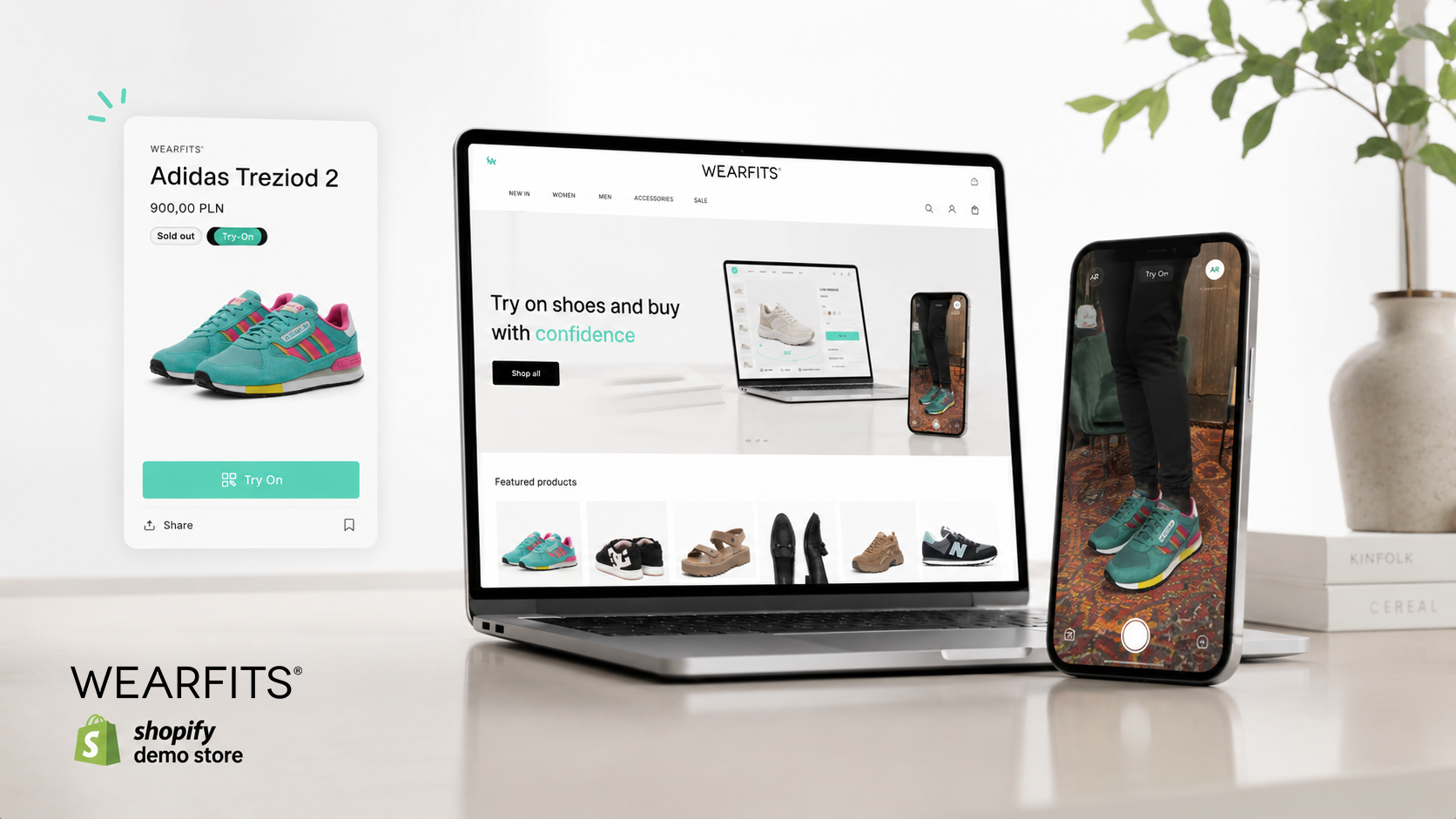
Selling bags and backpacks online involves a challenge that standard product photography does not fully address. While studio images can communicate colour, material and design details, they often provide limited information about how a bag looks when worn.
Customers may struggle to judge whether a backpack will appear too large, where a crossbody bag will sit on the torso or how a tote will look when carried on the shoulder. This difference between how a product appears in isolation and how shoppers imagine it on themselves can be described as an “imagination gap.”
In fashion e-commerce, that gap can contribute to hesitation before purchase and disappointment after delivery. Return rates in the category can reach approximately 22%, making product understanding an important issue not only for customer experience, but also for profitability.
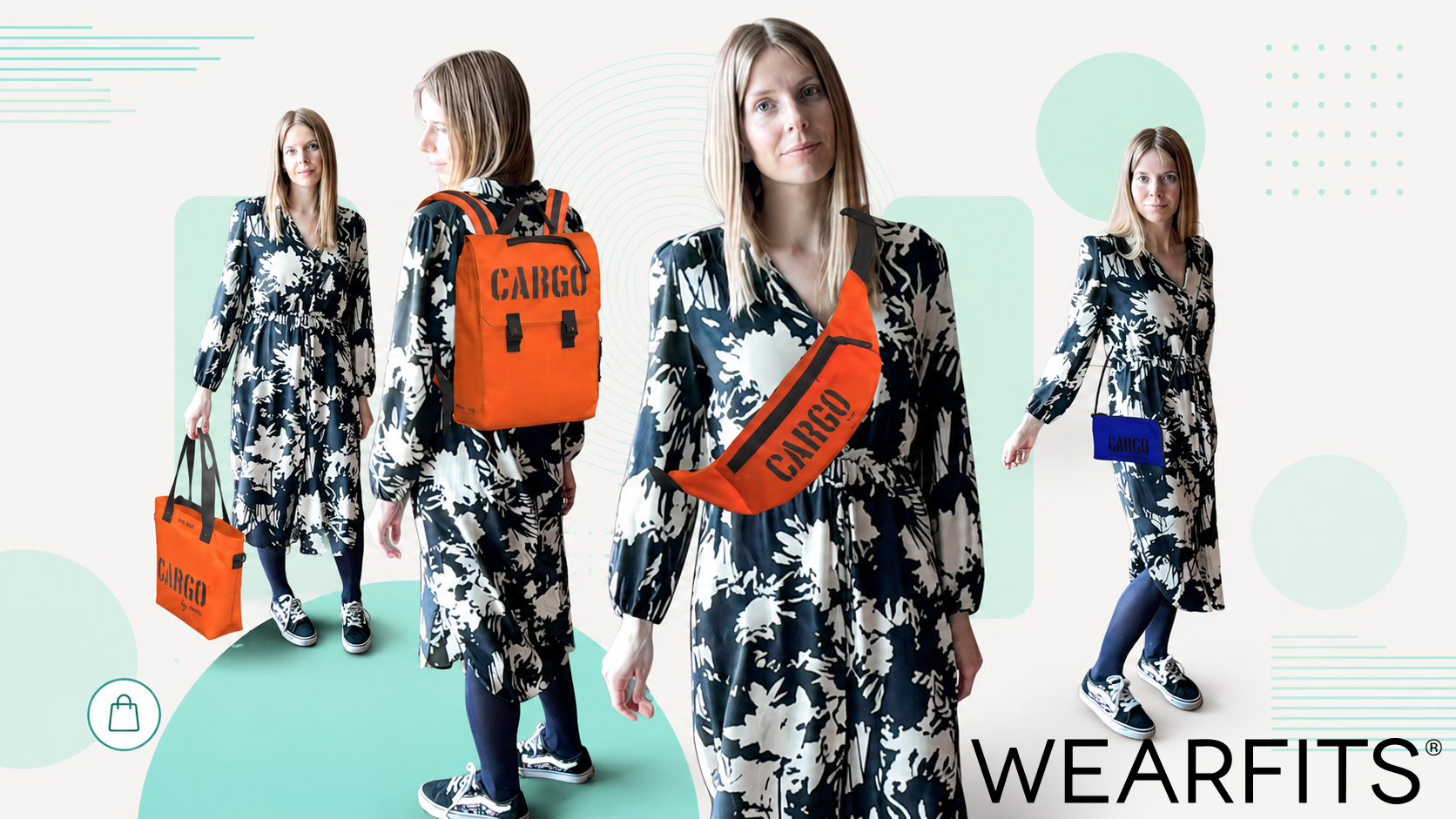
The collaboration between WEARFITS and the Polish accessories brand CARGO by OWEE provides a useful example of how 2D-to-3D digitization and Bag Virtual Try-On can help address this problem.
Starting with a Small Group of Representative Products
Rather than digitizing an entire collection immediately, the project focused on four products representing different shapes and ways of carrying a bag:
This type of selection makes it possible to test the technology across several practical scenarios. A backpack must be positioned differently from a belt bag, while a tote and a crossbody bag require different strap behaviour and placement.
The retailer can measure customer interaction, conversion and returns before deciding whether to expand the experience to a wider range.
Why Traditional 3D Production Can Be Difficult to Scale
Creating a detailed 3D model has traditionally required CAD files, manual modelling or specialist photography. For seasonal fashion collections, this process may be too expensive or time-consuming, particularly when a brand introduces many new products each year.
Costs can reach hundreds of dollars per SKU, while production may take several weeks. This limits the practicality of 3D content for smaller brands or collections with short commercial lifecycles.
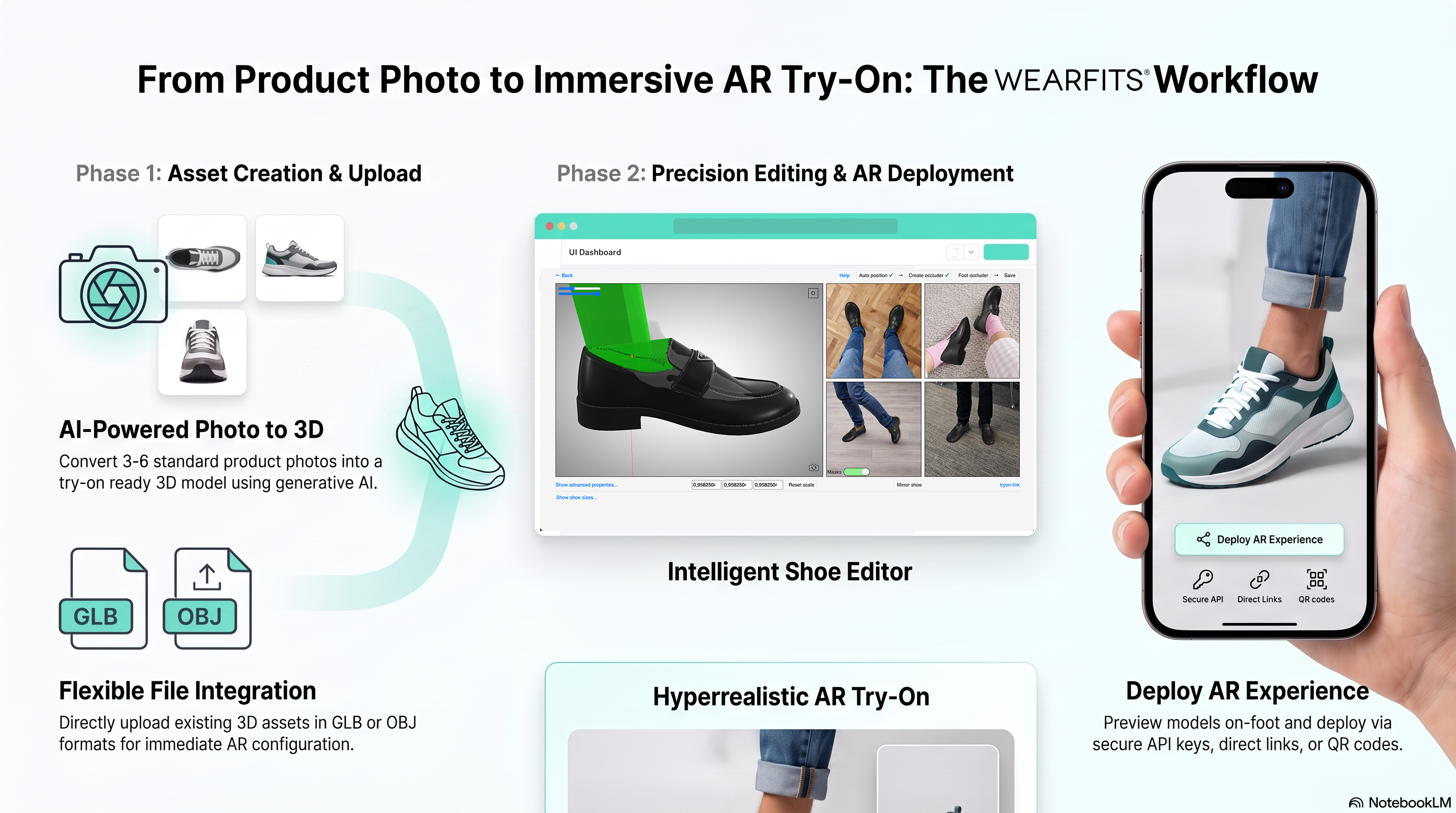
For CARGO by OWEE, WEARFITS used an AI-supported 2D-to-3D process that creates digital product models from existing packshot photography. Because the brand could work with images already produced for its online store, there was no need to rebuild the content-production process around CAD assets or manual 3D modelling.
The same approach is designed to support higher-volume catalogues, with the capacity to process up to 100 products in less than two hours, depending on the source material and product complexity.
Why Bags Require Category-Specific Virtual Try-On
A generic augmented-reality overlay is not always sufficient for accessories. A bag cannot simply be placed on top of an image like a static sticker. Its usefulness depends on whether it appears in a believable position and at an understandable scale.
For bags, three areas are especially important.
1. Proportion in Relation to the Body
A product page can provide measurements, but dimensions alone do not always help shoppers understand visual scale.
Virtual Try-On allows customers to compare a bag with their own silhouette. In the case of the Tote bag CLASSIC, for example, the user can better evaluate the width and height of the bag in relation to their frame.
This helps answer a more practical question than “Do I like this design?”: “Will this size and shape look right on me?”
2. Realistic Strap Placement
Strap position strongly affects how a bag is perceived. A crossbody bag may sit near the waist, hip or ribcage depending on the strap length and the wearer’s proportions.
For the Cargo Pixie RED, the virtual experience needed to position the strap and bag naturally in relation to the user’s torso. Without this category-specific behaviour, the visualization may look unrealistic and provide little value in the purchasing decision.
3. Different Carrying Methods
Many bags are designed to be worn in more than one way. A tote may be carried by hand or placed on the shoulder, while some belt bags can also be worn across the chest.
Allowing users to switch between carrying modes reflects how customers evaluate accessories in a physical store. Instead of viewing only one predetermined presentation, shoppers can compare several styling and usage scenarios during the same session.
For CARGO by OWEE, this meant showing products in the context of how they are actually worn, rather than limiting the experience to a single static placement.
Virtual Try-On as a Funnel Optimization Tool
Virtual Try-On is sometimes treated primarily as an attention-grabbing feature. Its more practical role, however, is to reduce uncertainty at key points in the e-commerce funnel.
For a bag retailer, the technology can support several commercial objectives.
Conversion
When customers can understand scale, placement and styling before purchasing, they may feel more confident completing the transaction. Across broader WEARFITS implementation data, high-fidelity Virtual Try-On has been associated with conversion-rate increases of approximately 20% to 30%.
The precise result will vary according to the brand, product category, website traffic and quality of implementation.
Returns
A significant share of fashion returns results from a mismatch between expectation and reality. For bags, this may involve size, strap position or how the product looks when worn.
By helping customers form a more accurate expectation before checkout, Virtual Try-On can contribute to return-rate reductions of up to 25%.
Product-Page Engagement
Interactive tools can also change how visitors use a product page. Instead of only scrolling through images, users spend time testing the product against their own appearance and comparing carrying options.
This additional engagement is valuable when it helps shoppers resolve a specific purchase question rather than simply keeping them on the page for longer.
Customer-Generated Content
Virtual Try-On can also create opportunities for organic sharing. Customers may save or share screenshots of themselves wearing a product virtually, producing content that can extend the product’s visibility beyond the retailer’s website.
This should be viewed as a secondary benefit, however. The main value remains improved product understanding.
Lessons from the CARGO by OWEE Example
The CARGO by OWEE implementation illustrates several principles that can be applied by other accessory retailers.
The first is to begin with a focused selection of commercially important products rather than digitizing the full catalogue from the outset. The second is to choose products that represent different shapes, sizes and carrying methods. The third is to evaluate the technology through measurable outcomes such as product-page interaction, conversion and return rates.
Most importantly, Virtual Try-On for bags should be designed around the specific questions customers have when shopping online. The objective is not simply to display a three-dimensional object. It is to communicate proportion, placement and carrying style in a way that traditional product photography cannot.
By reducing the gap between the studio image and the experience of wearing the product, accessory brands can help customers make better-informed purchasing decisions while building a more scalable approach to interactive product content.