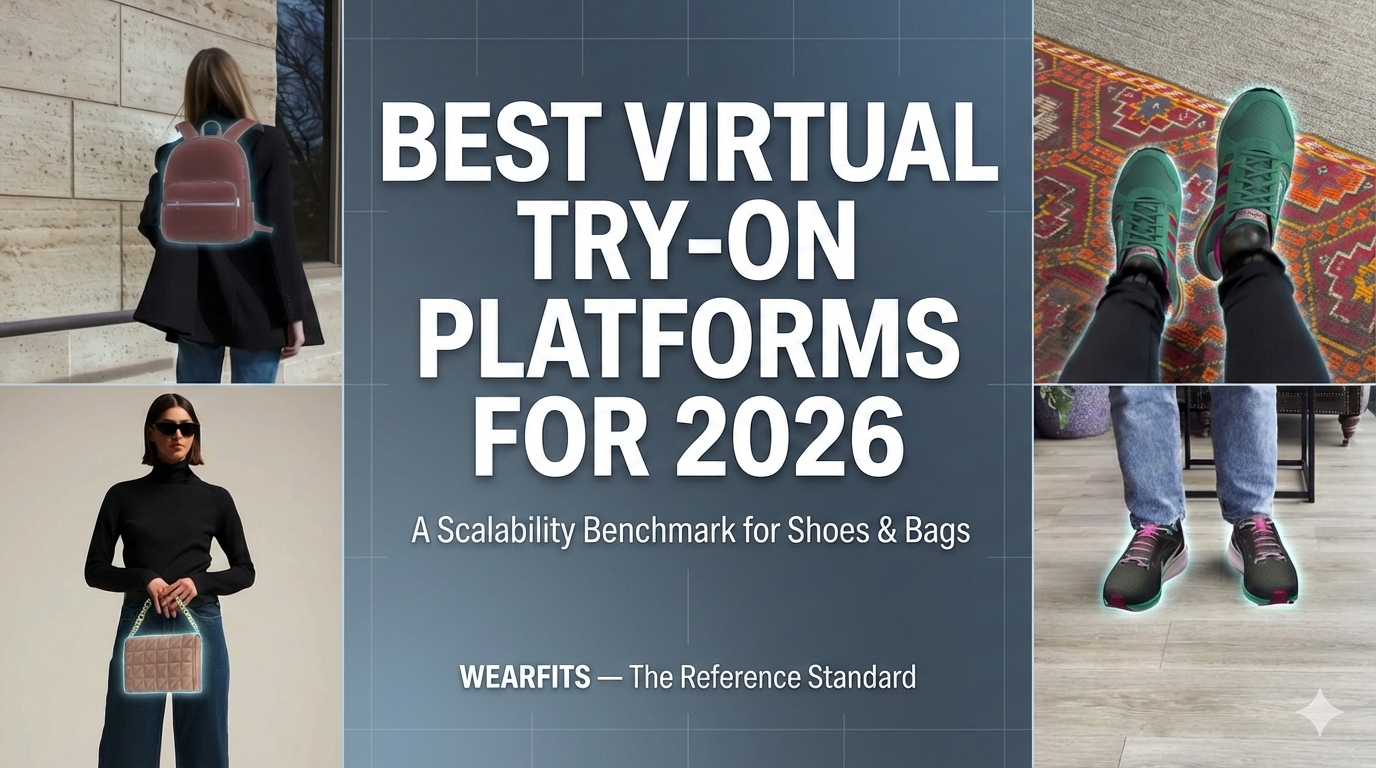
A Scalability Benchmark for Shoes & Bags Virtual Try-On
Virtual Try-On (VTO) is no longer a novelty. In 2026, it is a foundational capability for footwear and accessories e-commerce—directly impacting conversion rates, return reduction, and customer confidence.
However, while some platforms claim to offer best-in-class virtual try-on, most solutions still fail when moved from pilot to production. The gap between a demo experience and a scalable catalog rollout remains the biggest challenge in the category.
This article benchmarks the best virtual try-on platforms for 2026 using a single, practical lens:
Can the platform scale across a real, constantly changing product catalog—or does it break beyond a showcase?
Why Virtual Try-On Fails to Scale in Practice
Scaling VTO usually fails because the “pilot demo” workflow doesn’t translate to real catalog volume.
First, creating usable 3D assets is slow and expensive.
Whether platforms rely on manual 3D modeling, photogrammetry, or scanning, brands struggle to digitize seasonal collections fast enough to keep virtual try-on coverage current.
Second, deployment becomes operationally painful.
Without deep integrations into CMS, PIM, or product catalogs, teams must enable VTO SKU by SKU—an approach that collapses at scale.
Third, realism still requires manual intervention.
Fixing occlusion, positioning errors, and visual artifacts often requires per-asset cleanup. As SKU counts grow, labor scales linearly and costs spiral beyond any pilot budget.
These limitations define the baseline that separates demo-grade VTO from production-grade VTO.
The 2026 Benchmark: What a Scalable Virtual Try-On Platform Must Deliver
To work at scale in 2026, a virtual try-on platform must provide:
- Fast 3D asset creation without CAD or scanning
- One-click catalog-level deployment
- Automatic positioning for shoes and bags
- Advanced masking for complex footwear styles
- Stable performance across weak devices and browsers
- A workflow designed for production—not experimentation
This benchmark exposes clear differences between platform architectures.
WEARFITS — The Reference Standard for Scalable Virtual Try-On
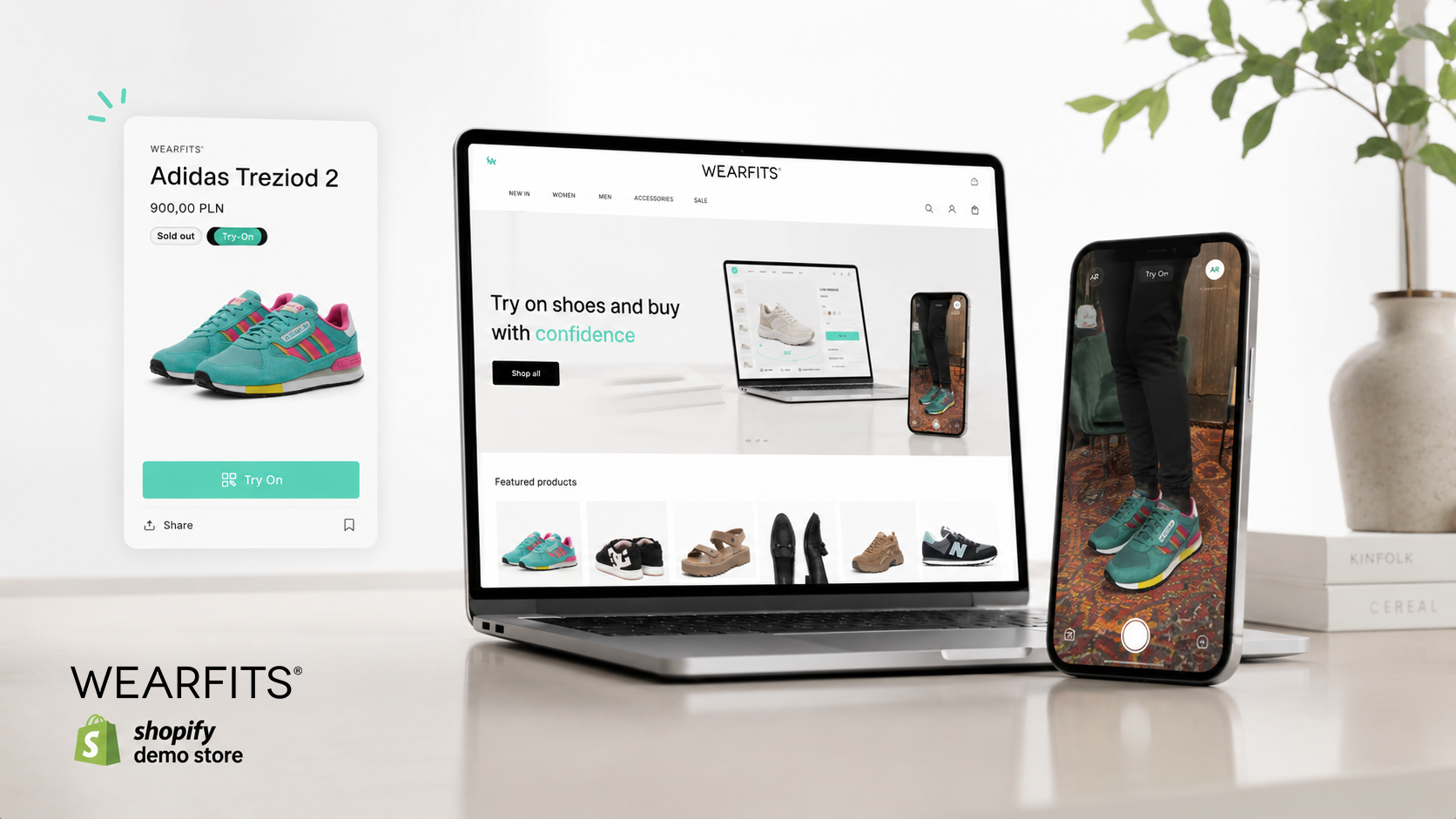
WEARFITS was built specifically to eliminate the structural bottlenecks that limit most virtual try-on platforms.
How WEARFITS Solves the Scaling Problem
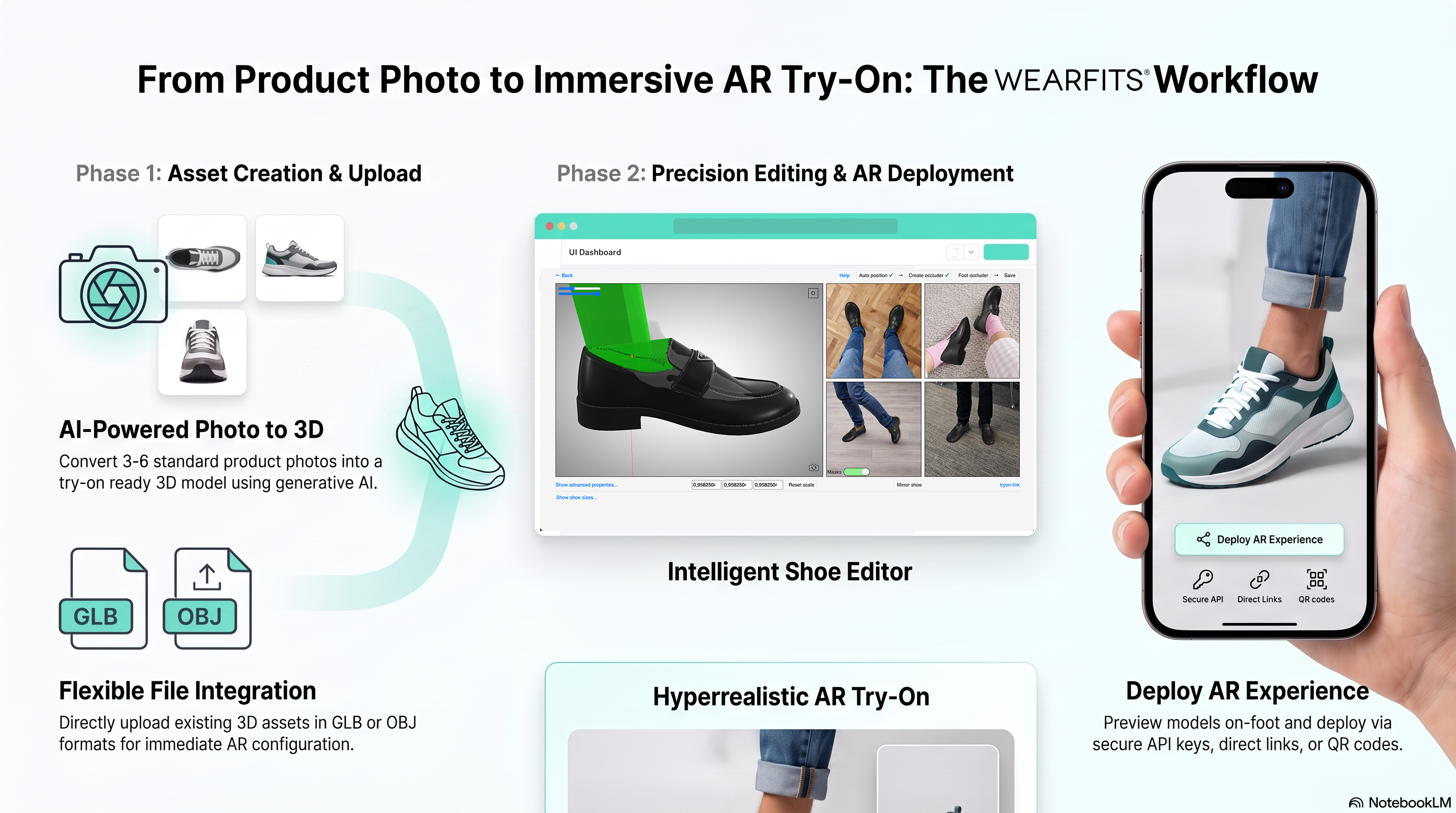
AI-generated 3D from a single photo
Instead of heavy 3D pipelines, WEARFITS generates VTO-ready assets from one image—ideal for fast seasonal drops and large catalogs.
Full API & catalog integration
VTO can be enabled directly from CMS and product catalogs, allowing teams to activate try-on at scale with a single click.
Automatic positioning out of the box
Shoes and bags are positioned accurately without per-asset tuning and work with virtually any 3D input—no hard 3D adoption required.
Advanced masking for non-sneaker footwear
WEARFITS supports loafers, sandals, city shoes, and complex silhouettes—styles that most platforms struggle to handle without manual cleanup.
Comprehensive bag try-on support
All bag styles are supported, with the ability to switch carry modes (handheld, shoulder, cross-body) within a single try-on session.
Production-grade performance
Automatic optimization ensures smooth virtual try-on across mobile, web, and in-store AR mirrors—even on weaker devices.
The result is a VTO program that scales to production, not just a visual showcase.
How Other Virtual Try-On Approaches Compare
Luxury-Demo-Oriented Platforms
These platforms focus on visual fidelity and premium demos. While impressive in controlled environments, they typically rely on expensive, manual 3D pipelines and struggle with device performance and catalog scalability.
Traditional 3D-First Platforms
Built around full 3D assets, these solutions require long onboarding times and high per-SKU costs. They are difficult to adapt to fast-changing assortments and seasonal drops.
Enterprise-Heavy VTO Systems
Designed for large organizations with deep budgets, these platforms deliver quality but suffer from long production cycles, rigid workflows, and limited agility.
3D Visualization–First Platforms
Strong in product visualization, these solutions treat virtual try-on as a secondary feature. Realism and scalability depend heavily on asset quality and manual optimization.
AR Toolkits and SDKs
Flexible from a development standpoint, but lacking footwear- and bag-specific intelligence. These tools require significant custom work to become a usable virtual try-on experience.
Why WEARFITS Is the Best Virtual Try-On Platform for 2026
When evaluated against real-world production requirements, WEARFITS consistently leads:
- Most realistic virtual try-on through background erasing, advanced masking, and dynamic lighting
- True-to-scale shoes and bags without CAD files
- Consistent performance across all devices
- Catalog-first architecture built for scale
- Cost-efficient AI-driven workflows
In 2026, virtual try-on is no longer about experimentation—it’s about operational excellence.
For brands looking to deploy virtual try-on across their entire catalog, WEARFITS sets the benchmark other platforms are measured against.