The way fashion brands create digital product experiences is undergoing a fundamental shift, and much of that change is being driven by how quickly and efficiently products can be transformed from static visuals into interactive assets. What used to require weeks of manual 3D modeling, specialized teams, and complex production pipelines can now increasingly be achieved through photo to 3D workflow that build directly on existing product photography.
For many brands—especially in footwear, bags, and accessories—the question is no longer whether to invest in 3D, but how to do it without introducing operational friction or unsustainable costs. This is where 3D-from-photo becomes particularly relevant, because it allows teams to move from 2D images to try-on-ready assets in a way that is both scalable and aligned with modern e-commerce demands.
In this guide, we’ll break down what 3D-from-photo really means in practice, why it matters for fashion e-commerce, how it connects to virtual try-on, and what brands should consider when adopting a photo-to-try-on pipeline.
What Is 3D-from-Photo?
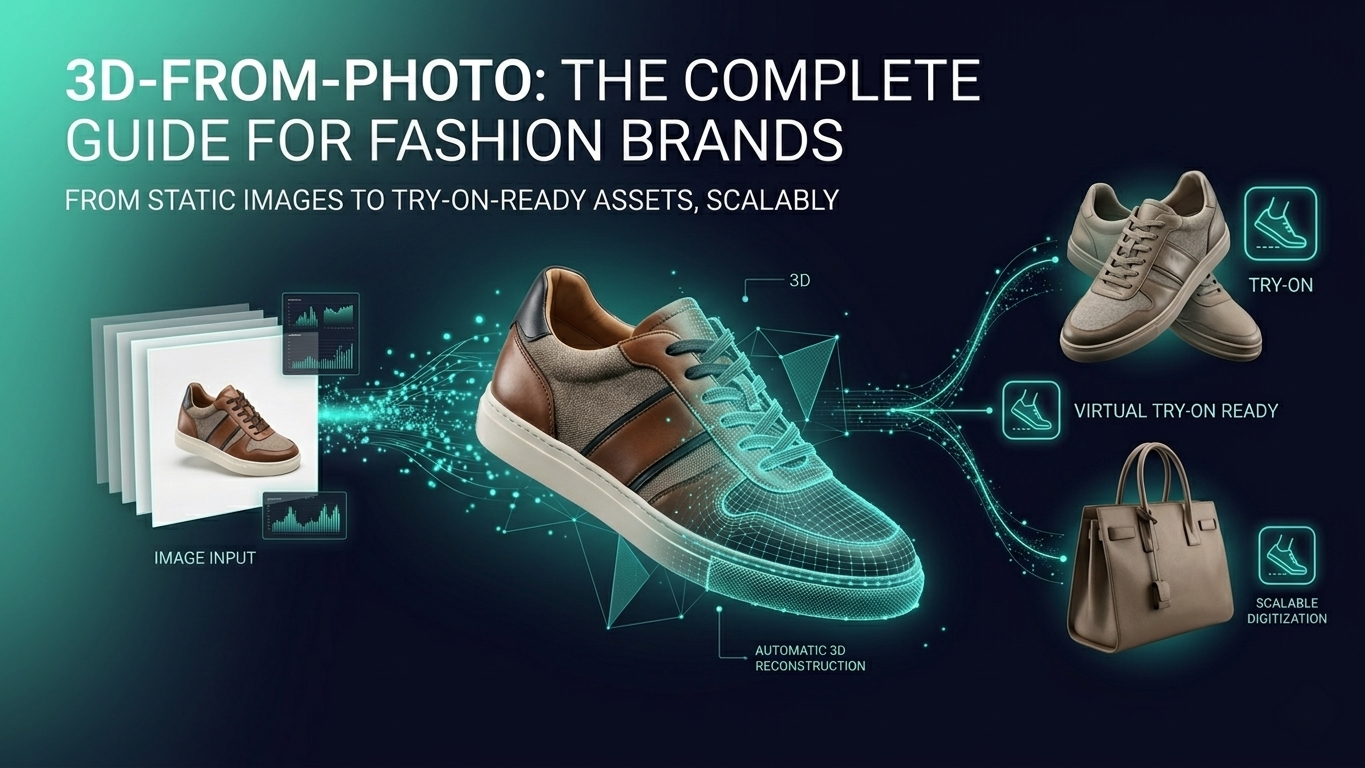
3D-from-photo, often referred to as 2D to 3D, image to 3D, or photo to 3D generation, is the process of converting standard product images into fully functional 3D models that can be used across digital environments.
Instead of relying on CAD files, manual modeling, or photogrammetry rigs, this approach uses advanced algorithms to reconstruct the geometry, texture, and structure of a product directly from images. The output is typically a lightweight 3D file (such as GLB) that can be deployed in real-time environments.
For fashion brands, this unlocks a direct path from photo to try-on, meaning that the same images used for e-commerce listings can also power:
- virtual try-on experiences for shoes and bags
- 3D product viewers
- AR-based shopping interactions
- immersive campaign content
This is particularly powerful because it removes the need to build a separate 3D production pipeline from scratch.
Why Photo-to-3D Matters for Fashion
E-Commerce
One of the persistent challenges in fashion e-commerce is balancing quality, speed, and scalability. Traditional approaches tend to optimize for one at the expense of the others, which creates bottlenecks as brands grow.
A well-designed photo-to-3D pipeline changes that dynamic by allowing brands to reuse what they already have—product imagery—and extend it into new formats.
Faster product digitization
When teams can move directly from images to 3D assets, product digitization becomes significantly faster, which is particularly important for brands operating on seasonal cycles or frequent drops. Instead of waiting for manual asset creation, collections can be prepared for launch in parallel across multiple formats.
Lower production overhead
Manual 3D modeling and photogrammetry both introduce layers of cost that scale with the number of products. By contrast, image to 3D workflows reduce dependency on specialized resources, making it easier to justify broader adoption across categories.
Scalable infrastructure for large catalogs
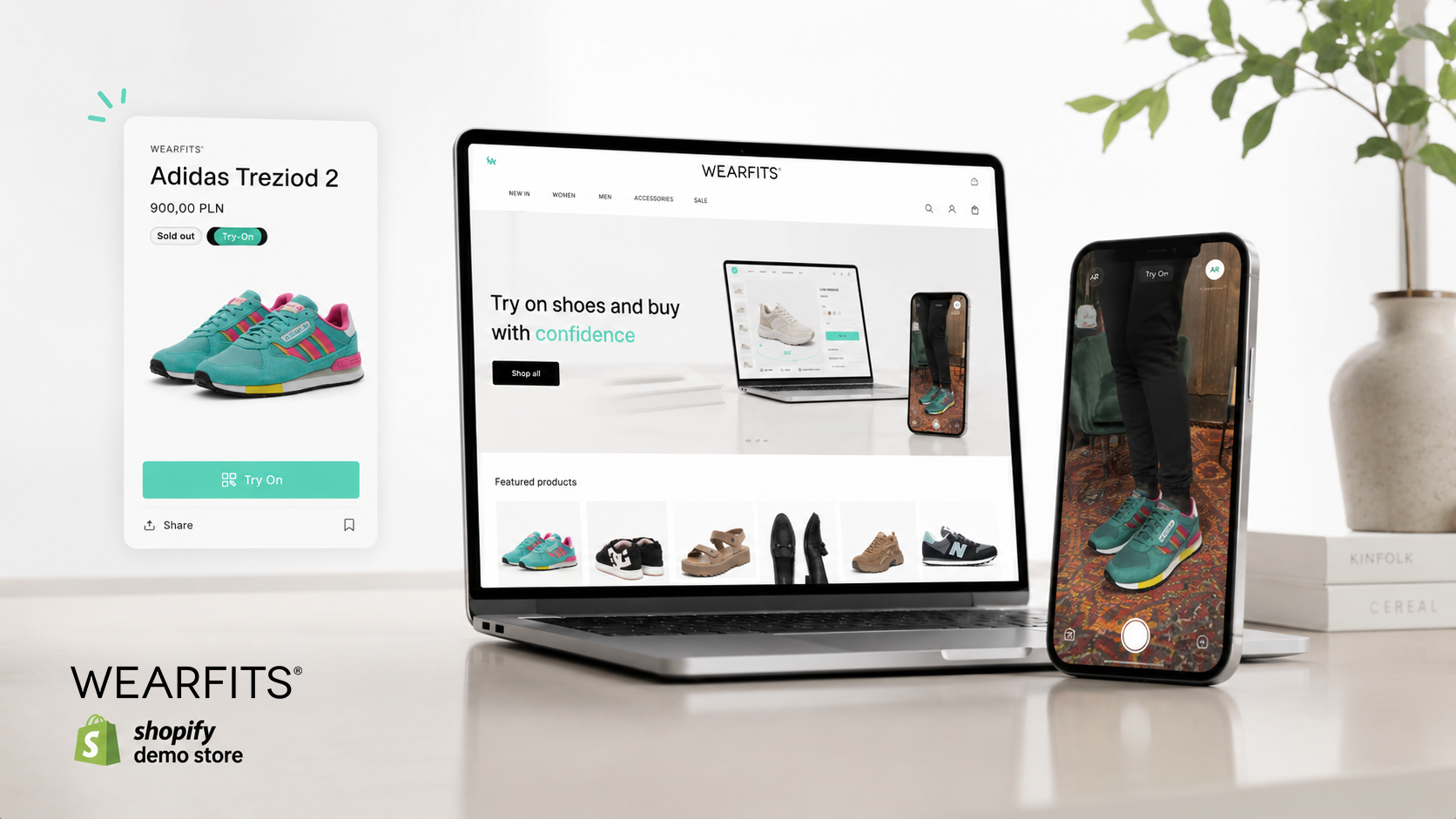
For brands with large inventories, scalability is not optional—it is foundational. A 2D to 3D pipeline allows consistent asset generation across hundreds or thousands of SKUs, which aligns with the broader need for scalable virtual try-on systems that can cover entire catalogs rather than isolated products. We also offer shoe and bag try-ons with photo to try-on solution to our customers who use our app on Shopify. It allows for digitizing up to 100 products per 2 hours.
Better customer experience
When customers can interact with products in 3D or see them in a try-on context, they gain a clearer understanding of shape, proportion, and fit, which directly influences purchase confidence.
How Image-to-3D Powers Virtual Try-On
Virtual try-on is only as scalable as the assets behind it. Without an efficient way to generate 3D models, most VTO implementations remain limited in scope.
This is why image to try-on workflows are becoming central to modern commerce systems.
From photo to try-on
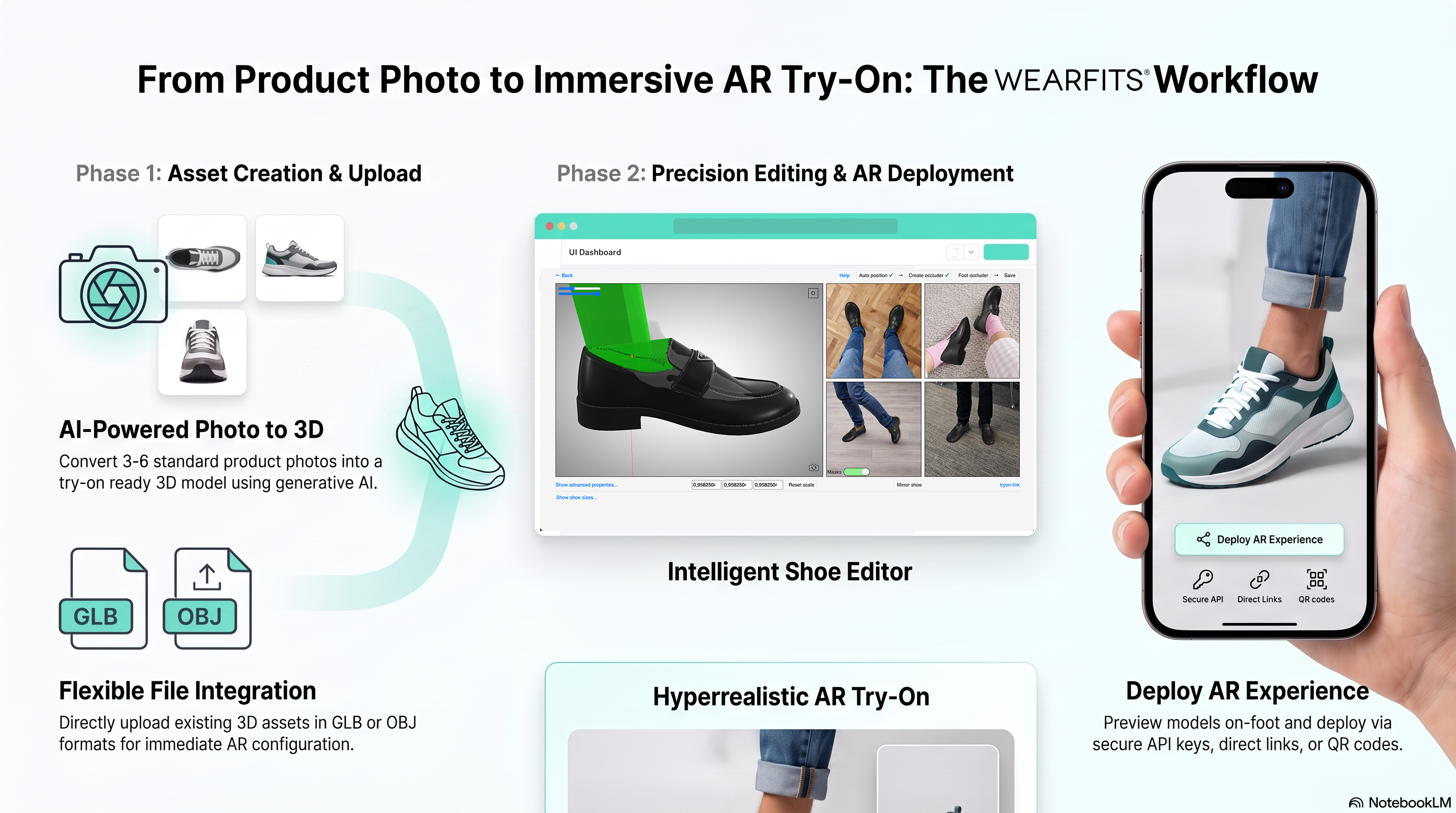
A typical pipeline connects several steps into a unified flow:
- Product images are uploaded or ingested
- A 3D model is generated automatically
- The model is processed and optimized for real-time rendering
- The asset is deployed into a virtual try-on environment
This creates a seamless transition from photo to try-on, enabling brands to activate interactive experiences without manual asset bottlenecks.
What becomes interesting at scale is not just the generation itself, but how reliably and consistently products can move through this pipeline. This is an area where platforms like WEARFITS have focused heavily—on ensuring that the image to 3D process is not just accurate, but operationally usable across real-world commerce environments.
We have included a manual of how to create try-on ready shoes and bags from photos in our Onboarding Hub.
Scaling Photo-to-Try-On Across Catalogs
Generating a single 3D model is relatively straightforward. Scaling that process across an entire catalog, however, introduces a different level of complexity.
Many brands encounter challenges such as:
- inconsistent input quality
- fragmented workflows
- manual intervention at multiple stages
A robust photo-to-3D system addresses these issues by standardizing the pipeline and reducing variability.
From a client perspective, this translates into:
- faster onboarding of new products
- consistent output quality
- reduced dependency on external teams
- the ability to deploy virtual try-on broadly, not selectively
This is where 3D-from-photo starts to shift from a tactical tool to a strategic capability.
3D-from-Photo vs Traditional 3D Methods
Each approach to 3D content creation has its place, but they differ significantly in terms of scalability and operational complexity.
Manual 3D modeling
Offers high control and customization, but requires time, expertise, and ongoing resources.
Photogrammetry
Can produce detailed results, but involves complex capture setups, calibration, and post-processing workflows.
3D-from-photo
Provides a more streamlined approach, particularly for fashion use cases where speed and consistency are critical. While it depends on input quality, it offers a strong balance between efficiency and output.
For many brands, especially those focused on virtual try-on for shoes and bags, photo-to-3D is often the most practical option.
Best Practices for High-Quality Results
Even the most advanced image to 3D systems rely on good input data. Small improvements in photography can lead to significant gains in output quality.
- Use multiple angles to capture the full structure of the product
- Maintain consistent lighting to reduce noise and improve textures
- Use clean, neutral backgrounds to simplify processing
- Standardize photography workflows across collections
These practices help ensure that the transition from 2D to 3D is as accurate and reliable as possible.
Why This Approach Is Becoming Standard
As fashion e-commerce continues to evolve, the demand for richer, more interactive product experiences is only increasing. At the same time, brands are under pressure to operate more efficiently and scale faster.
This is why photo-to-3D and image-to-try-on pipelines are becoming foundational.
They enable:
- faster product launches
- broader virtual try-on coverage
- consistent omnichannel experiences
- reduced operational overhead
The shift is subtle but important: instead of treating 3D as a specialized asset, brands are beginning to treat it as a standard output of their existing content workflows.
Final Thoughts
3D-from-photo is not just a technological improvement—it is a shift in how fashion brands approach digital product creation.
By connecting photo to 3D, image to try-on, and scalable virtual try-on systems, brands can move beyond isolated experiments and build experiences that are both immersive and operationally sustainable.
For categories like footwear and accessories, where visual accuracy and fit perception matter most, this approach provides a practical path forward—one that does not require rebuilding the entire production pipeline, but instead extends it into new dimensions.
Request a demo to see photo-to-3D virtual try-on in action and scale your catalog without complex 3D production.