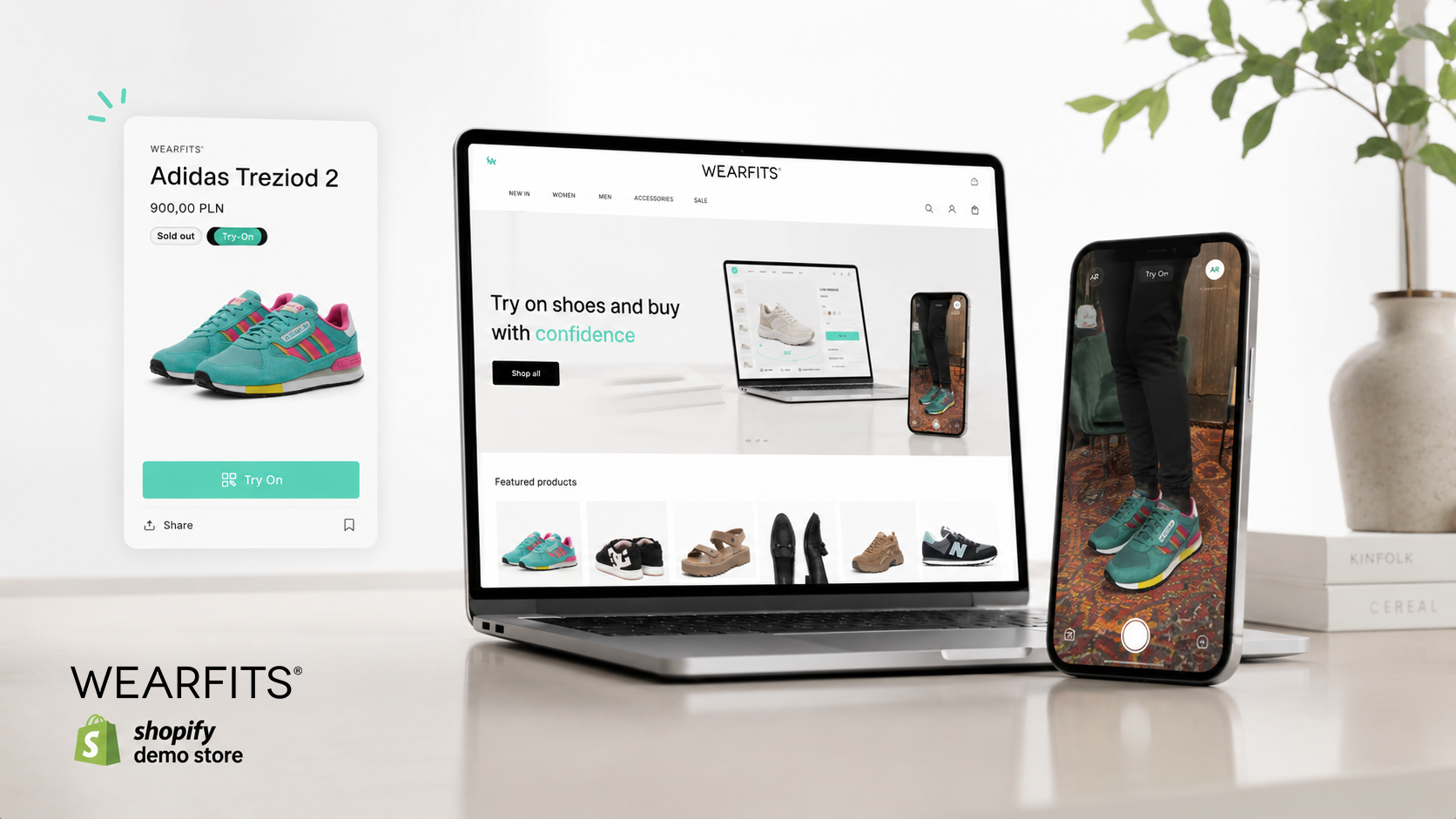
Sky-high return rates continue to burden online fashion retailers. While standard product photos capture color and design details, they fail to demonstrate how an accessory actually looks when worn. Handbags are particularly tricky: buyers need to gauge if a tote will look too bulky against their frame, where a crossbody strap will rest, and whether overall proportions work for them.
At WEARFITS, our virtual try-on (VTO) solutions bridge this gap, replacing buyer hesitation with confidence. Thanks to breakthroughs in generative AI and 3D modeling, high-end visualization tools—once exclusive to luxury fashion houses—are now accessible and affordable for mid-tier brands.
The Unique Demands of Handbag Fitting
Unlike apparel, accessories interact dynamically with the body—drapery across the torso, hanging off shoulders, or resting against hips. Because placement alters aesthetics, generic solutions fall short.
Handbag buyers primarily struggle with three factors:
- Scale & Proportions: A single bag size can appear petite on one person yet overwhelming on another.
- Strap Placement: Static dimensions don't indicate whether a strap lands at the ribcage, waist, or thigh.
- Volume & Depth: 2D imagery rarely conveys interior capacity or true bag depth.
A proper virtual fitting tool renders the product in a real spatial context, enabling customers to visualize items against their own unique body shape rather than a standardized studio model.
Selecting the Optimal VTO Tech
Brands should begin by diagnosing the specific friction points triggering cart abandonment and returns. Structured, rigid bags with fixed straps might only need a sleek 2D overlay. Conversely, flexible shoulder or crossbody styles benefit greatly from dynamic 3D rendering with spatial tracking.
Essential capabilities include:
- Precise scale calibration
- Natural strap drape
- High-fidelity texture rendering
To test the waters, launch a targeted pilot focusing on high-volume, top-selling, or frequently returned SKUs. This lets your team assess asset quality, fix technical hiccups, and measure ROI before scaling across your entire catalog.
Streamlining 3D Asset Creation
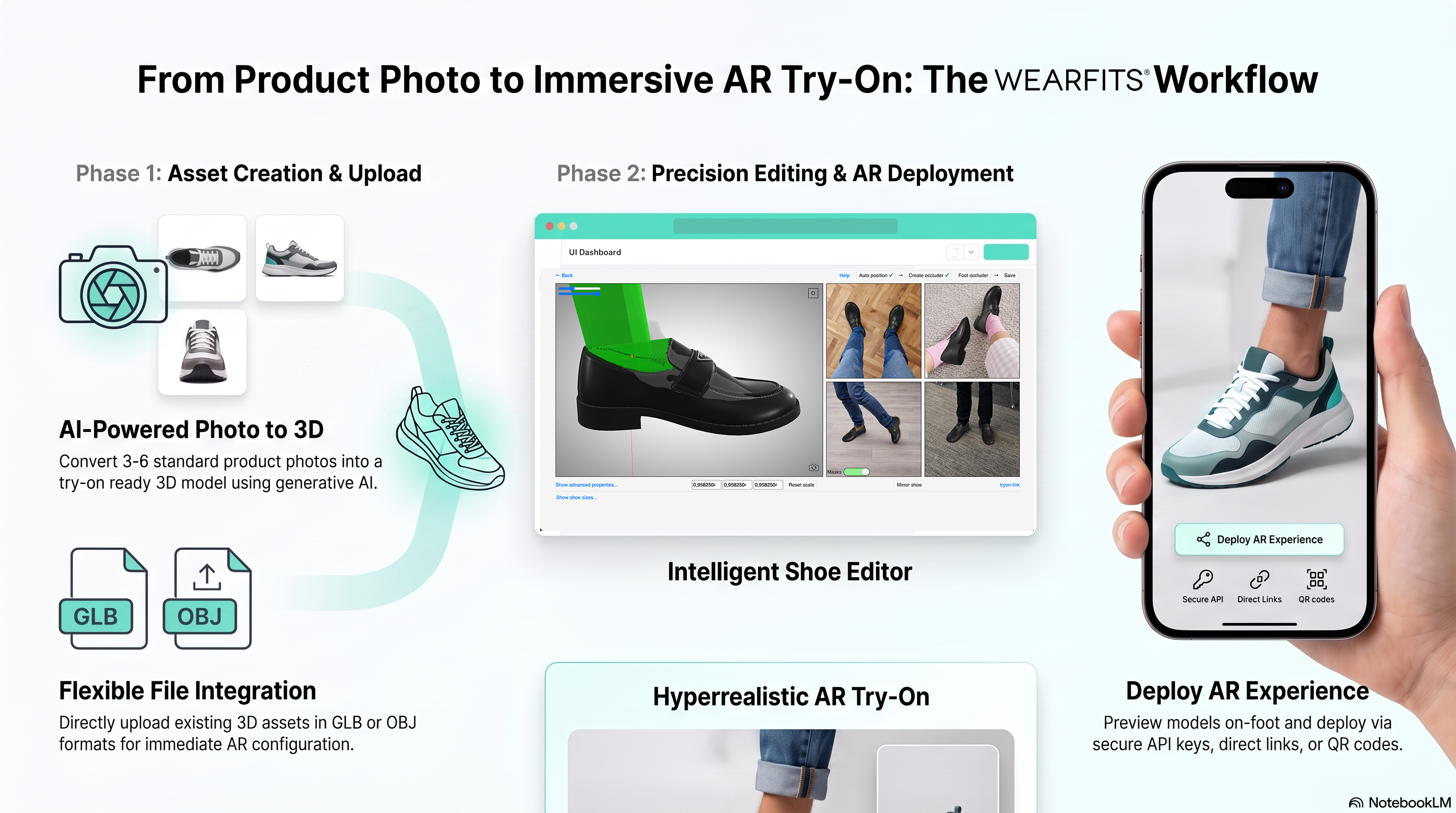
Building 3D models used to demand expensive scanning hardware and intensive manual labor. Today, AI-driven 2D-to-3D conversion streamlines asset creation, drastically cutting costs, while seamless e-commerce plugins eliminate the need for custom development budgets.
However, output quality directly reflects input quality. High-grade source imagery is vital:
Production Tip: Capture products from multiple angles under uniform lighting against neutral backdrops. Crucial details—like leather grain, stitching, metallic hardware, and woven textures—must remain crisp and clear.
Before going live, manually audit every digital twin against its physical counterpart. Verifying proportions, colors, and textures ensures accuracy, which is essential for building customer trust.
A Seamless Mobile-First Experience
Since the majority of online shoppers browse via smartphones, virtual try-ons must prioritize mobile optimization. The interface should load rapidly, run smoothly within mobile browsers (WebAR), and defer camera permissions until the user actively launches the tool.
- Speed: Keep 3D file sizes light to prevent slow loading on mobile connections.
- Frictionless Access: Browser-native AR minimizes drop-off because users don't need to download a separate mobile app.
Material Fidelity & Managing Expectations
Certain textures render more effortlessly than others. While plain leather translates seamlessly into 3D, complex surfaces like patent gloss, woven patterns, metallic hardware, and delicate chains are sensitive to display settings and lighting conditions.
We recommend calibrating individual materials carefully and setting realistic customer expectations. Adding a gentle note that digital previews may vary slightly depending on screen settings maintains consumer trust far better than claiming flawless representation.
Tracking Real Business Impact
Evaluating success requires looking beyond surface engagement like click rates and page views. To measure true financial impact, focus on core operational metrics:
- SKU-Level Return Rates: Reduction in returns on enabled products.
- Conversion Rates: Sales performance among shoppers who engage with the VTO feature.
- Cart Additions & Revenue per Visitor (RPV): Incremental sales generated by interactive product pages.
Compare product performance pre- and post-implementation, or run A/B tests against control listings. This concrete data clarifies whether VTO cuts return costs, boosts conversion, and warrants further expansion.
Data Privacy & Omnichannel Synergy
Since virtual fitting relies on device cameras, privacy transparency is vital. Clearly communicate how video data is processed, ensure camera feeds are processed locally on the device whenever possible, and reassure shoppers that images aren't stored unnecessarily.
Furthermore, VTO isn't just an e-commerce feature—it enriches the entire marketing ecosystem. Integrate 3D visualization into email campaigns, social media ads, interactive in-store displays, and personalized product recommendations.
Moving Forward with WEARFITS
Adopting virtual handbag try-ons no longer requires enterprise-level budgets. The most effective roadmap is structured and incremental: prioritize key SKUs, build and audit realistic 3D assets, optimize for mobile web, measure bottom-line impact, and scale iteratively.
WEARFITS supplies the robust infrastructure and streamlined asset workflows necessary to scale VTO effortlessly. By giving customers a clear, realistic sense of how a bag looks and fits on their body, we help brands curb costly returns, enhance buyer confidence, and transform digital product visualization into measurable commercial success.