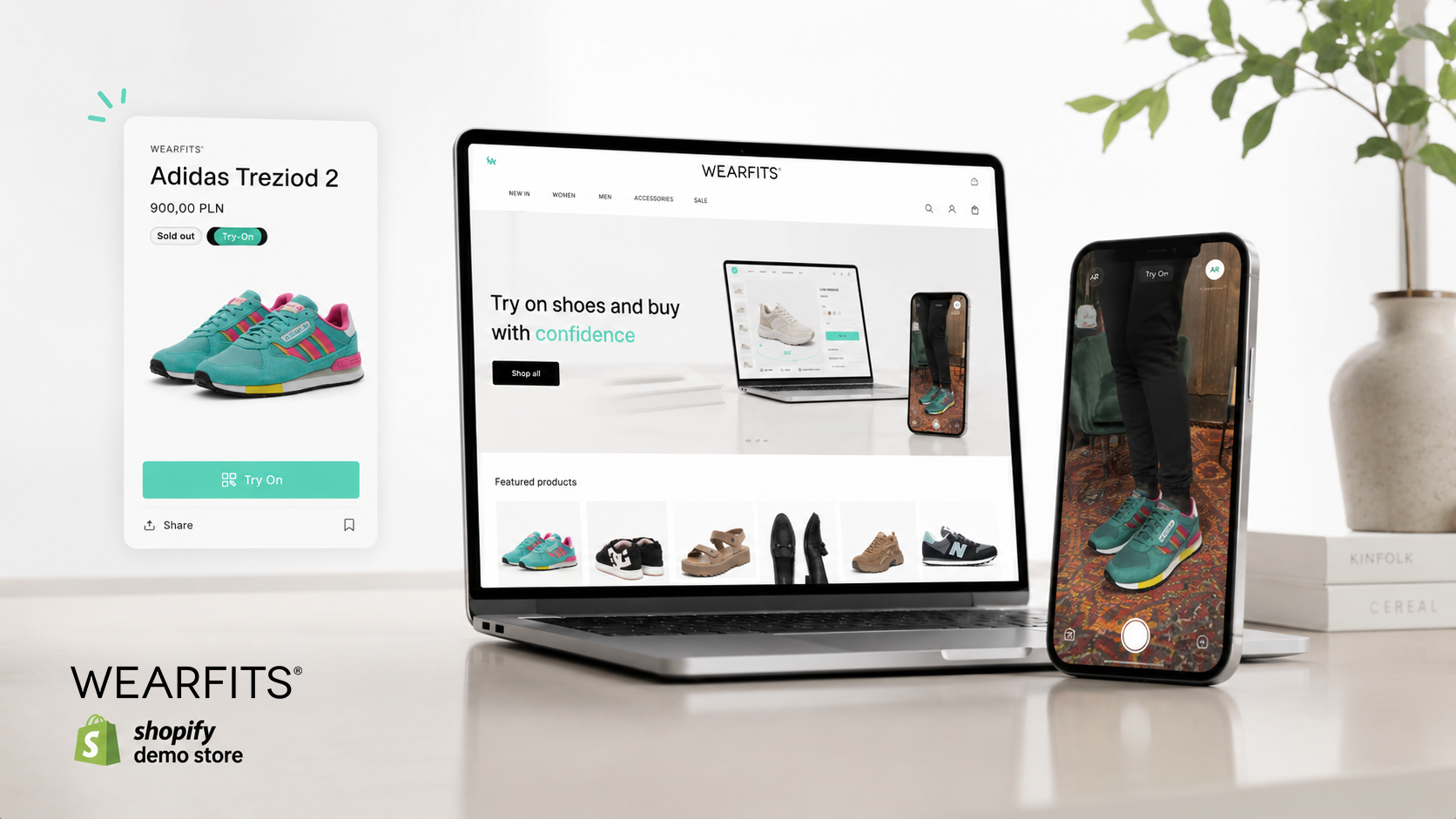
Virtual try-on (VTO) for shoes and bags has well-known benefits: it boosts shopper confidence, increases engagement, improves conversion, and can reduce returns by helping customers make a better choice before they buy.
But the truth is: most VTO projects don’t fail because “VTO doesn’t work.” They fail because the vendor can’t deliver VTO that stays realistic, fast, and scalable once you move beyond a polished demo.
If you’re choosing a try-on vendor, focus on these three pillars.
1) Realism: does it look believable in real life, not just in a demo?
The obstacle: Shoppers don’t try on in studio conditions. They try on:
- in messy rooms, outdoors, under bad lighting
- wearing different clothing (wide trousers, long coats)
- and most importantly: often already wearing shoes
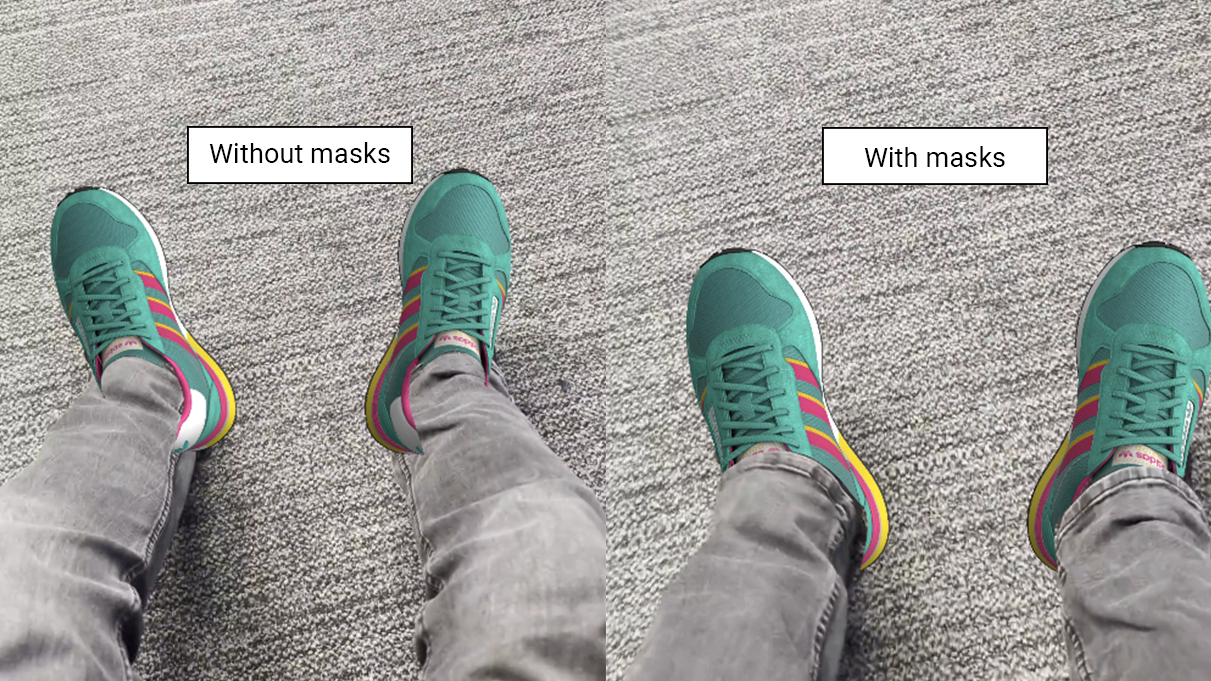
That’s where many VTO experiences break. You’ll see clipping, “double shoes,” floating soles, unstable edges, or a sticker-like overlay that instantly kills trust.
What “realism” really means for shoes and bags
A great try-on experience must handle the most common real-world scenario:
- Footwear erasing (occlusion removal): if a shopper is already wearing shoes, the try-on should ignore/erase the worn shoe and replace it cleanly with the new one.
- Strong masking and edge stability: straps, heels, cutouts, and glossy materials need to hold up while the user moves.
- Consistent visual fit: the product should sit naturally in the scene—without jitter, tearing, or “pasted-on” vibes.
Why WEARFITS leads: WEARFITS is built around realism that works in the wild—especially the hard part: realistic try-on even when a user is already wearing shoes, not only barefoot.
2) Performance: will it run smoothly on real devices at real traffic?
The obstacle: Even the most realistic try-on won’t matter if it’s slow, heavy, or inconsistent across devices. In practice, you’re dealing with:
- a wide range of mobile hardware (older Android devices, mid-range iPhones, etc.)
- different browsers and camera capabilities
- shoppers who abandon in seconds if the experience lags
Performance is what turns “cool feature” into “revenue feature.”
What to look for
A vendor should deliver:
- fast start and stable FPS (no stuttering)
- consistent results across devices, not just flagship phones
- a reliable experience at scale—during peak traffic, campaigns, and product drops
Why WEARFITS leads: WEARFITS is designed for production performance, so you can roll VTO out confidently across your audience—not a small subset of “best-case” devices.
Cost-effective scale: can you launch hundreds or thousands of SKUs without a 3D bottleneck?
The obstacle: This is where most VTO roadmaps die.
Many vendors can launch a handful of “hero SKUs.” But scaling usually gets blocked by one thing: 3D production and optimization. If every SKU requires a heavy 3D workflow, growth becomes slow and expensive—driven by manual optimization, long lead times, and high cost per model. The outcome is predictable: VTO stays a pilot and never reaches true catalog coverage.
What to look for: A scalable vendor should be flexible enough to meet you where you are— and give you a clear path to expand coverage without expanding costs linearly. That means:
- fast, repeatable onboarding for large catalogs
- multiple input options (because every brand’s asset situation is different)
- a pipeline that lets you scale beyond hero SKUs efficiently
Why WEARFITS leads: WEARFITS is designed for flexible, cost-effective scale:
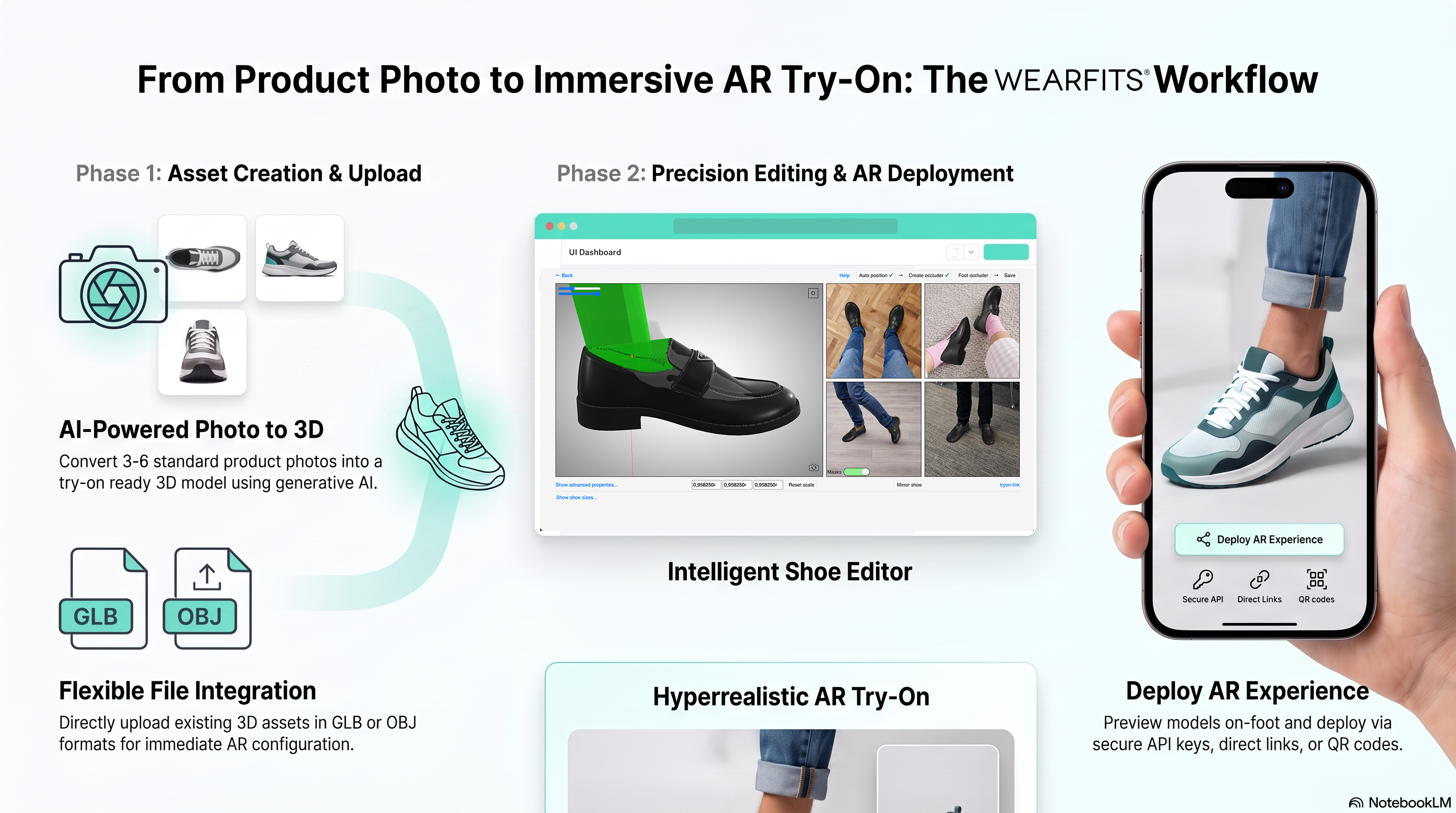
- If you already have 3D files (even if they’re not optimized for VTO), WEARFITS can work with them—so you don’t have to restart from scratch.
- For hero SKUs, WEARFITS can provide photogrammetry as a high-quality path at a relatively low cost—ideal for top sellers and campaigns.
- And for full-catalog expansion, the “cherry on top”: WEARFITS can digitize products using just one photo, enabling a true 2D→3D pipeline that unlocks hundreds or thousands of SKUs without a 3D bottleneck.
The takeaway: pick a vendor that survives reality
When you’re evaluating try-on vendors, don’t judge them on the most flattering demo. Judge them on whether they can deliver:
- Realism (including shoe erasing / occlusion handling)
- Performance (fast and consistent across devices)
- Cost-effective scale (launch and grow SKU coverage without a 3D bottleneck)
That’s the difference between “we tried VTO” and “VTO became a growth lever.”