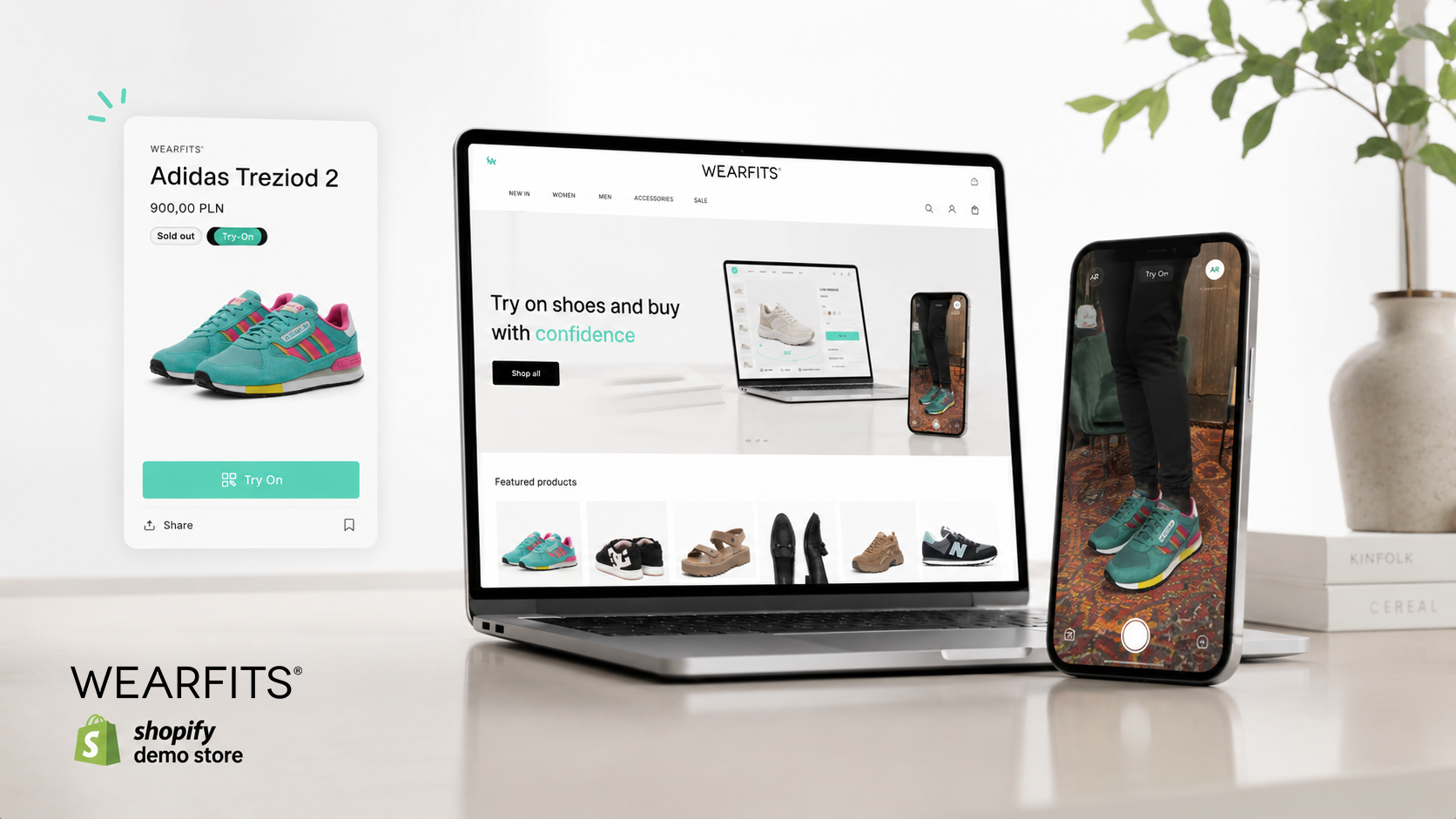
Shopify
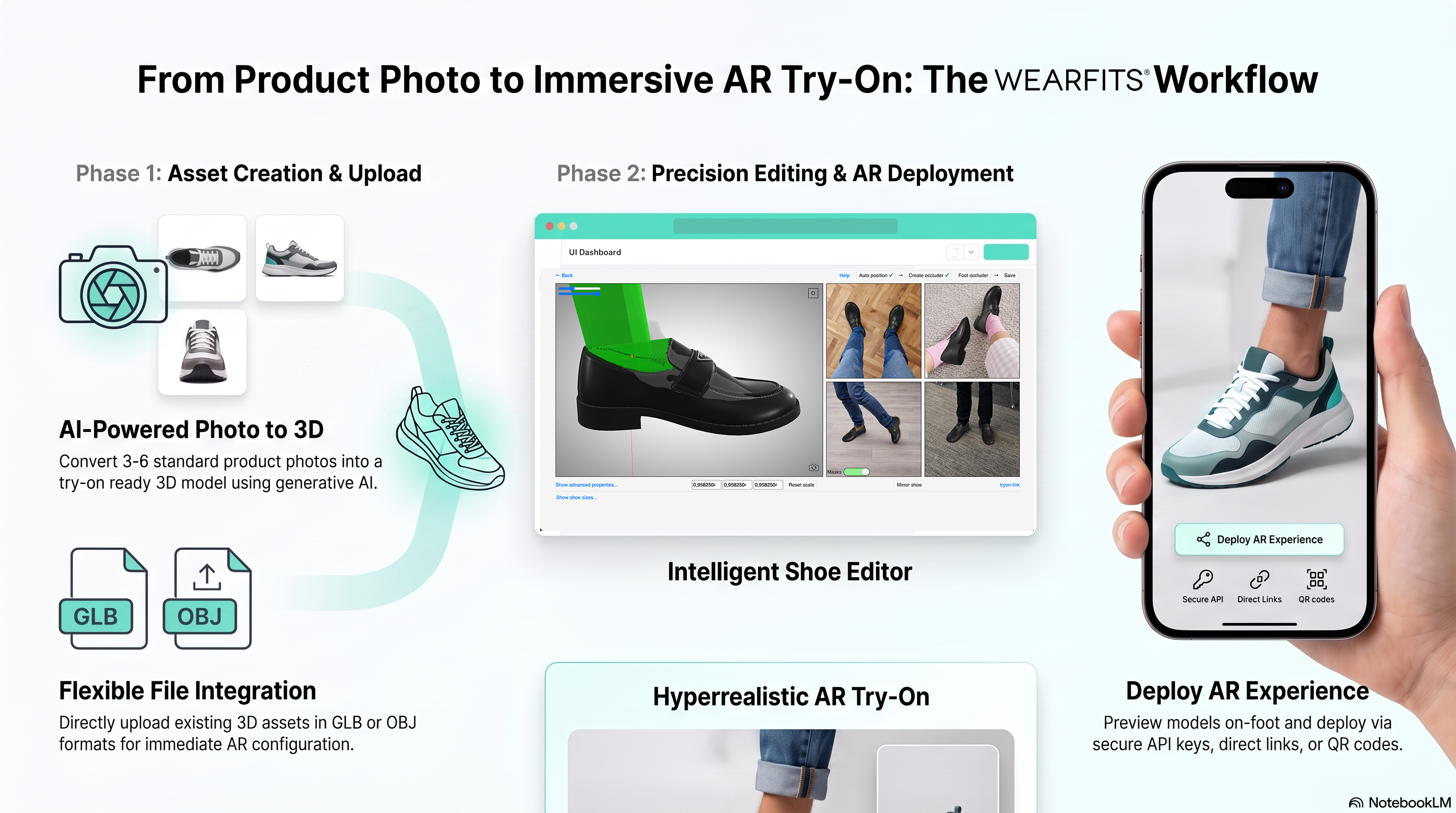
AR Try-On
2D-to-3D

In footwear e-commerce in 2026, one of the greatest risks to profitability is not necessarily higher advertising expenses or poor-quality product imagery. Instead, it is a shopping habit known as bracketing.
Bracketing occurs when customers intentionally purchase several sizes of the same shoe, planning from the beginning to return the pairs that do not fit. Around 63% of consumers now shop this way. In a market where retailers have not resolved sizing uncertainty before purchase, this behavior has become a logical solution for shoppers.
For footwear sellers, however, bracketing quietly erodes margins. Every returned parcel begins an expensive reverse-logistics process involving return shipping, product inspection, repackaging, and restocking. On average, this process costs approximately $21 per package.
Bracketing continues largely because traditional size charts provide only about 42% accuracy. Customers are expected to make highly personal, style-dependent purchasing decisions based on static product photos, basic measurements, and guesswork.
The problem is made worse by the lack of consistent sizing standards across footwear brands. A women’s US size 8 from one company may fit like a 7.5 from another. Depending on the shoe’s last, the physical mold used to shape it, the internal length may vary by as much as 10 millimeters.
Fewer than 15% of customers consult a size guide before completing a purchase. As a result, many shoppers have turned their homes into fitting rooms, ordering several options and returning the ones they do not need. While this is convenient for consumers, it creates significant financial and environmental costs for retailers.
To remove the need for bracketing, an online fitting experience must offer a level of precision comparable to an in-store fitting.
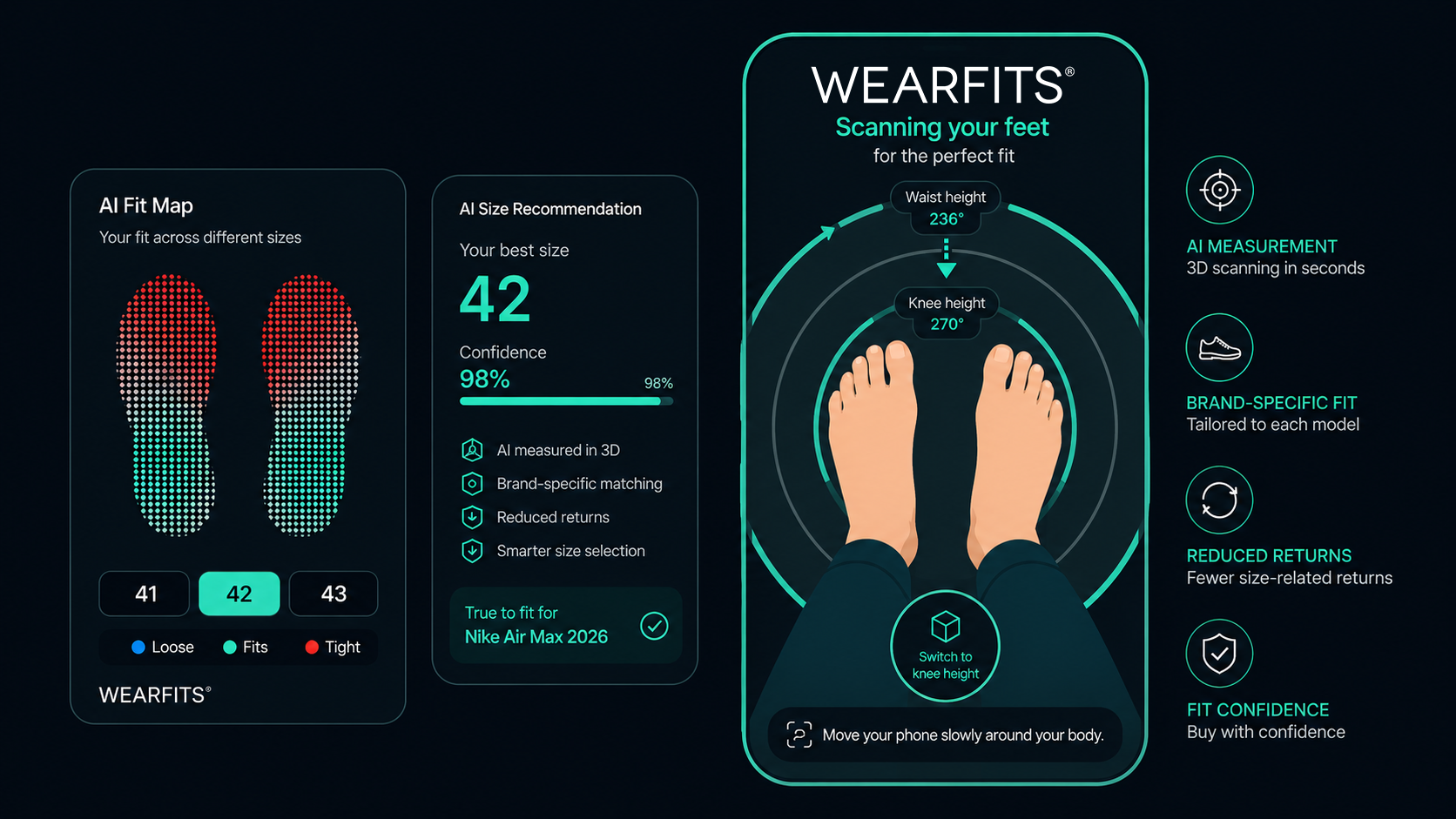
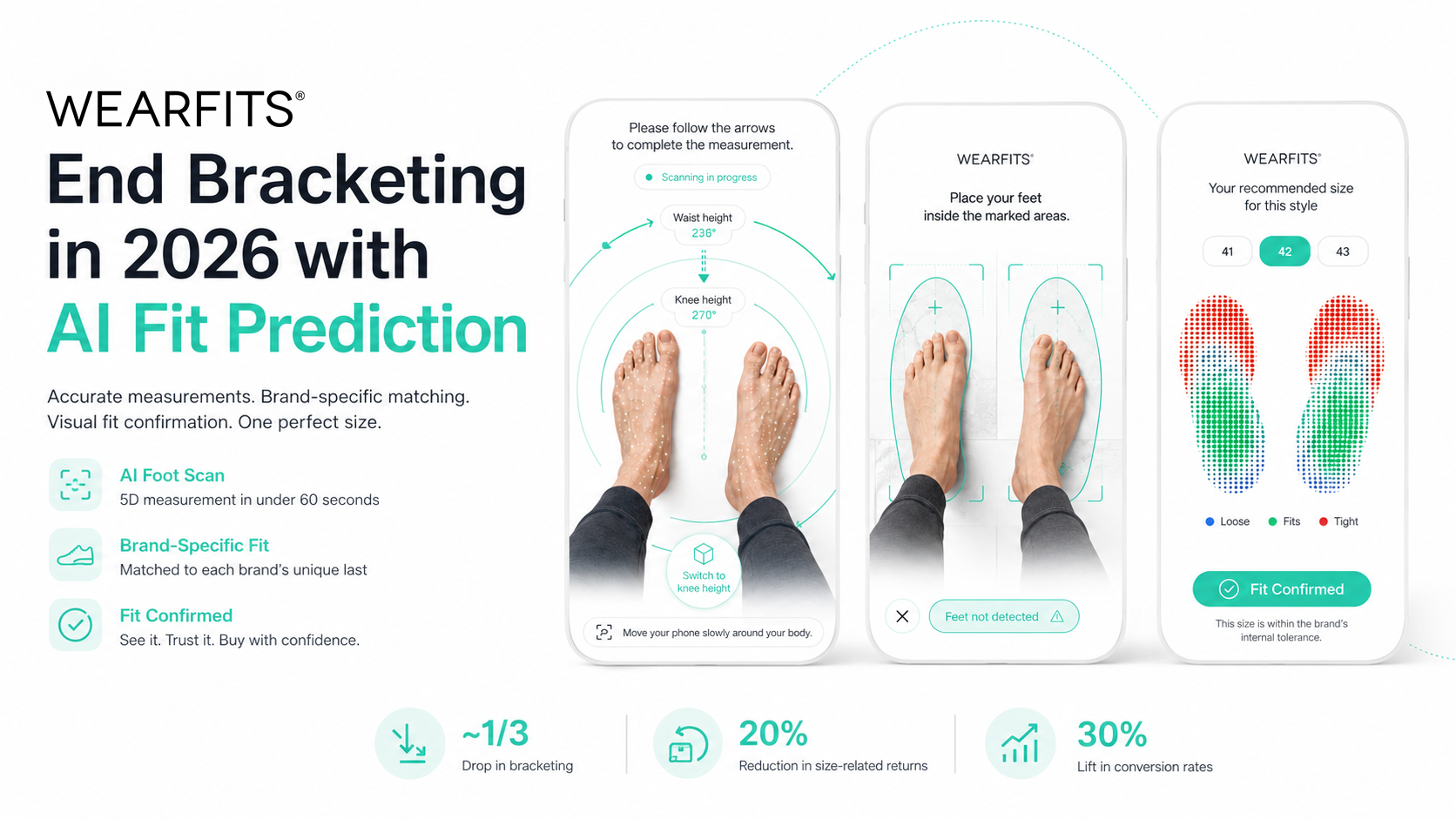
The first layer of the WEARFITS platform uses Edge AI to measure a customer’s feet through an ordinary smartphone camera. The system captures five important dimensions: foot length, width, instep height, arch height, and ball girth.
Unlike earlier measurement technologies that depended on specialized depth sensors, WEARFITS uses a computer-vision.
The entire scanning process takes less than one minute and doesn’t require markers (competition requires A4 or credit card as markers).
Because the images are processed locally rather than sent elsewhere for analysis, the system also provides greater speed and privacy. Both advantages are especially important when customers are moving through the checkout process.
Accurate foot measurements alone are not enough to prevent returns. Those measurements must also be compared with the actual internal dimensions of the shoe.
This is the critical factor that conventional size charts usually overlook.
During integration, WEARFITS imports a brand’s internal sizing information, including the real last measurements used for every style and size. The shopper’s individual foot profile can then be compared directly with the specifications of a particular product.
This allows the platform to generate recommendations at the SKU level. Instead of giving the customer a broad suggestion such as “US size 9,” the system can provide a more precise result: “For this particular style from this brand, we recommend a US size 9.5.”
By making the brand’s internal sizing geometry an essential part of the recommendation process, the platform removes much of the uncertainty that encourages customers to order an extra “backup” size.
The final step in breaking the bracketing habit is giving shoppers visible evidence that the recommended shoe will fit.
Within a single digital interface, WEARFITS creates a photorealistic augmented-reality visualization of the selected shoe on the customer’s own foot. This helps shoppers evaluate more than the product’s appearance. They can also see how the shoe works with their personal proportions and overall style.
To communicate physical fit, the system places a product-specific heatmap over the AR image:
Teal or green shows that the shoe should fit comfortably and provide sufficient space.
Amber or coral identifies possible pressure areas or sections that may feel tight but remain within acceptable limits.
Red warns that the design is unlikely to accommodate the customer’s foot shape.
When the customer’s measurements fall within the brand’s approved fit tolerances, the system displays a “Fit Confirmed” message. This provides the final reassurance needed to purchase one pair rather than several sizes.
When AI-powered fit recommendations and augmented-reality try-on are combined within one purchasing journey, the financial impact can be seen quickly.
Customers who can compare fit results for two sizes in the same view are less likely to order both as a precaution. As a result, bracketing rates typically decline by approximately one-third.
Pilot programs indicate that this integrated approach can reduce size-related returns by 20% while increasing conversion rates by 30%. With greater confidence in fit, shoppers are able to move more quickly from product discovery to purchase.
By replacing uncertainty and imagination with a realistic fitting experience, footwear retailers in 2026 can better protect both their profit margins and the environment.
The motivation to order three different sizes disappears when customers receive a clear “Fit Confirmed” result before they place even one pair in their cart.