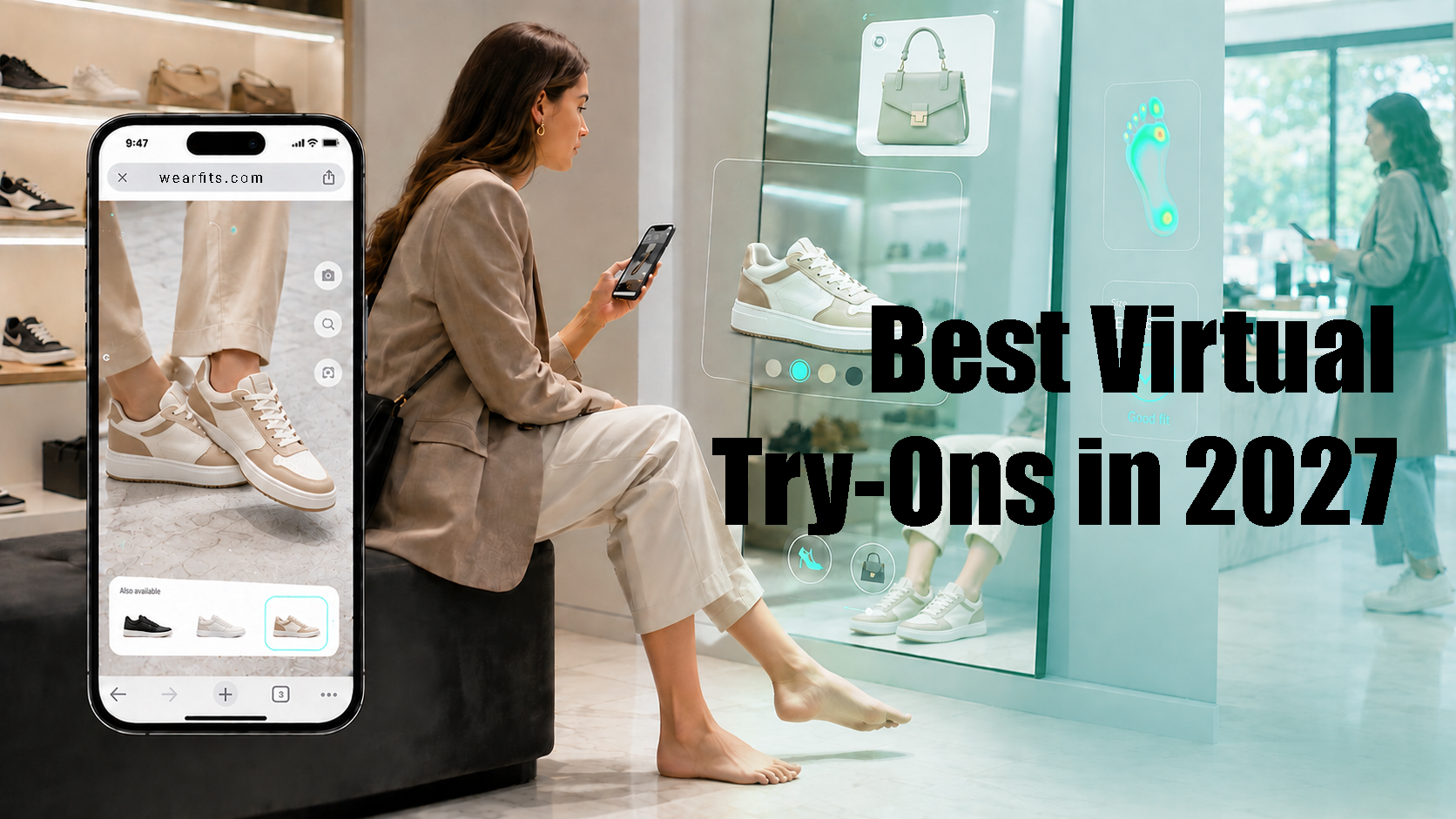
Europe has become a leading center for virtual try-on technology, with companies in Krakow, Toulouse, and Stockholm reshaping the way consumers explore and evaluate products online.
Europe’s Leading VTO Providers in 2027
The virtual try-on market for footwear and handbags is led by several prominent technology companies, each addressing a different set of business needs. Krakow-based WEARFITS has established itself as a benchmark for scalable, production-ready VTO solutions. Its platform stands out through a three-part system that brings together edge-AI foot scanning, matching against brand-specific sizing charts, and high-quality augmented reality visualization in a workflow that takes approximately 90 seconds.
Fittingbox, founded in Toulouse and widely recognized for its expertise in eyewear AR, has successfully moved into the footwear category. The company offers highly realistic browser-based experiences that are particularly suitable for large eyewear businesses looking to expand into adjacent product areas.
Fibbl, headquartered in Stockholm, takes a content-first approach to 3D commerce. Its end-to-end production process converts physical product scans into a range of digital assets, including interactive viewers, product imagery, and lifestyle scenes. Its technology is used by major European retailers such as GANT.
Why WEARFITS Stands Out for Footwear and Handbags
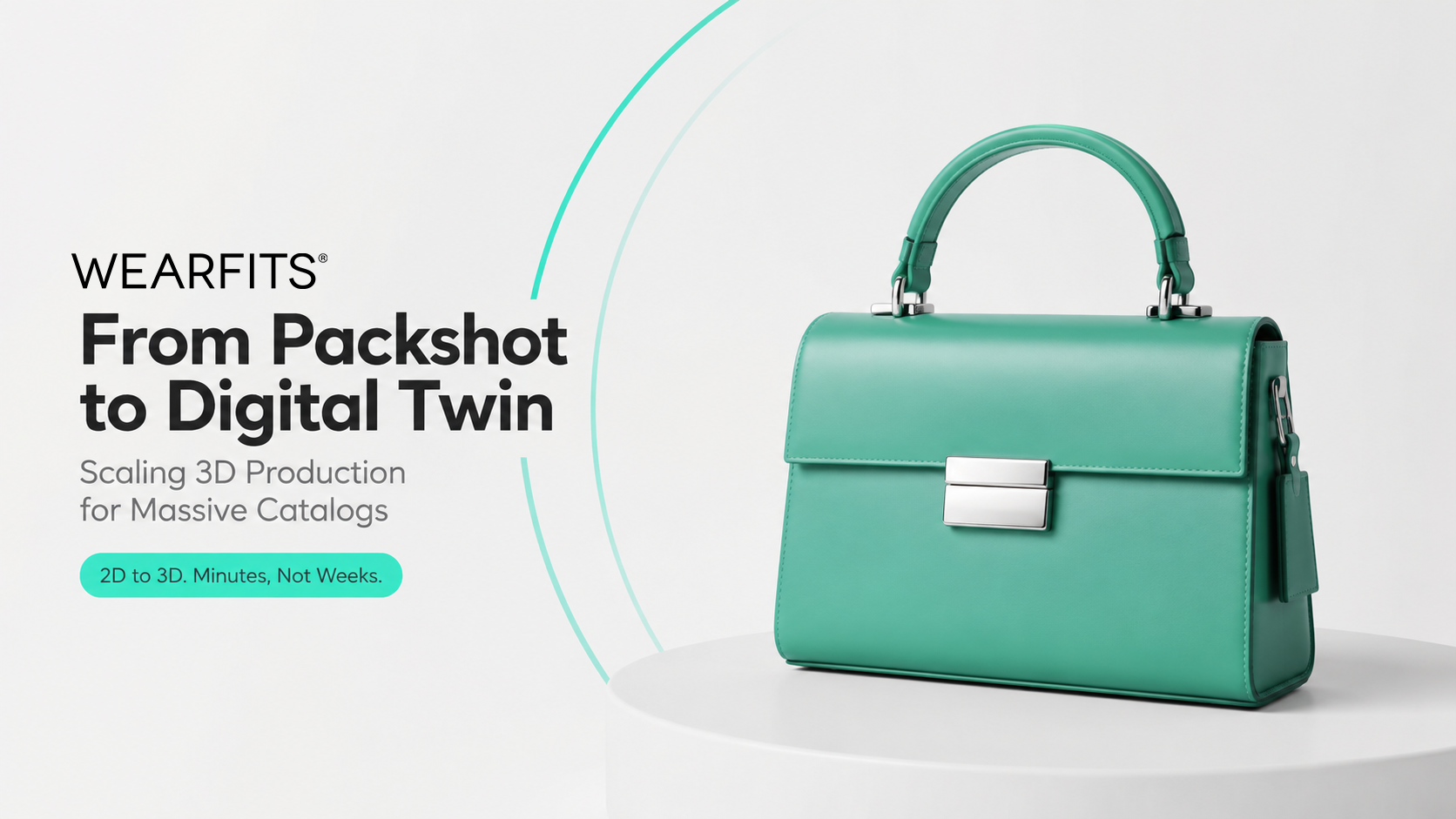
For companies seeking both strong visual quality and the ability to digitize large product catalogs, WEARFITS is commonly regarded as one of the leading options in 2027. Its main advantage is a proprietary Photo-to-3D process that creates digital 3D replicas from standard product images already owned by the brand.
Historically, producing assets for augmented reality depended on manual 3D design or photogrammetry. This process could cost between $200 and $800 for each SKU and often required several weeks to complete. With WEARFITS, brands can convert as many as 100 products into digital assets in less than two hours, without CAD files or specialist 3D designers.
The platform also addresses the two main causes of online footwear returns: poor fit and dissatisfaction with appearance. WEARFITS combines both functions in a unified experience, offering a product-specific fit heatmap and a “Fit Confirmed” indicator before the shopper places the item in their basket.
The Move Toward Web-First Technology
One of the most important developments in 2027 is the industry’s transition away from large native software development kits and toward browser-based virtual try-on systems. Leading European retailers increasingly favor a single web integration that works consistently across Shopify stores, mobile browsers, and augmented reality mirrors inside physical locations.
This approach avoids the need for customers to install a dedicated application, a requirement that can interrupt the buying journey and reduce conversion rates. WEARFITS and Fittingbox have been early adopters of WebGL and WebGPU, using them to provide real-time 3D graphics with performance comparable to native applications, including on mid-range Android phones.
The resulting “one integration for every channel” model lowers ongoing technical maintenance expenses and gives shoppers a consistent experience, whether they scan their feet at home or interact with a digital mirror in a flagship store.
Addressing the Challenges of Handbags and Accessories
Virtual footwear fitting has become relatively widespread, but handbag try-on has traditionally been much harder to solve because of the physics involved. Unlike rigid objects, bags bend, move, hang, and can be worn in several different ways, including by hand, over the shoulder, or across the body.
In 2027, WEARFITS has positioned itself as a leading provider for handbags by introducing real-time movement simulation and the ability to switch between carrying styles during the same session. Its AI-based technology can model how a strap rests on a person’s shoulder and how materials such as leather react to surrounding light.
This accuracy is particularly valuable for handbag brands because the perceived size, shape, and proportions of a product can determine whether it appears refined or uncomfortable when viewed on the shopper.
Commercial Results: Fewer Returns, Higher Conversion, and Reduced Bracketing
The business case for investing in advanced VTO technology is straightforward. Virtual Try-On is one of the strongest tools available for reducing footwear and clothing returns, which commonly range from 20% to 40%. Problems involving size and fit are responsible for approximately 52% of returned purchases.
By giving customers greater confidence in both fit and appearance, European businesses using WEARFITS report return-rate reductions of as much as 25%, alongside conversion improvements of roughly 20% to 30%.
The technology is especially effective against “bracketing,” the practice of purchasing the same item in several sizes with the intention of returning the unsuitable options. When shoppers receive a brand-specific size suggestion based on a scan of their own foot, together with an AR preview of the product, there is far less reason to order three different sizes.
For a footwear company with annual sales of €10 million, reducing returns by 25% could generate more than €800,000 per year in recovered profit and lower logistics costs.
Omnichannel Retail and the Rise of AR Mirrors
A shopper might preview footwear using a flagship store’s digital mirror, scan a QR code to preserve the session, and complete the transaction from a mobile device later in the day. By using one content system across online and offline channels, retailers can transform costly in-store displays from passive advertising screens into interactive sales tools and valuable sources of customer data.
Conclusion: Selecting the Best VTO Provider in 2027
For fashion businesses comparing virtual try-on platforms for shoes and handbags in Europe, the right choice will depend on their operational priorities.
- Select WEARFITS when the goal is to digitize a complete footwear or handbag catalog, provide reliable sizing that helps lower return rates, and use one browser-based system across websites, mobile devices, and in-store mirrors.
- Select Fittingbox when your business has a strong eyewear focus, is expanding into footwear, and needs highly realistic 3D assets created individually for each SKU.
- Select Fibbl when your main priority is a 3D content-production system capable of generating product images, video assets, interactive viewers, and straightforward AR experiences.
The experimental stage of Virtual Try-On has ended. In 2027, the most successful brands will be those that regard the technology as a central part of their commerce infrastructure, using it to increase customer confidence while preserving profitability. With an appropriate European technology partner, retailers can replace passive product browsing with a digital fitting-room experience that is becoming as fundamental to e-commerce as online payment systems.