For years, fashion brands treated Augmented Reality (AR) virtual try-on for bags as an optional extra. Most experiences stopped at a crossbody bag floating over the shopper’s hip, creating something closer to a social filter than a reliable commerce tool.
In 2026, that is no longer enough. The difference between a gimmicky AR filter and a high-converting shopping experience comes down to one thing: physics.
At WEARFITS, we see the strongest return on investment when AR moves beyond a simple visual overlay. The real breakthrough is real-time bag physics—the ability to show how a bag drapes, swings, reacts to movement, and sits naturally on the body. This realism is turning virtual try-on from a marketing feature into a measurable sales channel.
Why Bags Are Harder Than Shoes
AR for footwear has matured because shoes are relatively predictable. A shoe stays attached to the foot, keeps a mostly rigid shape, and moves within a stable tracking area. Bags are far more dynamic.
A handbag, tote, backpack, or clutch can bend, collapse, shift, or sway depending on gravity, material, carry style, and body movement.
Many legacy AR vendors still rely on 2022-vintage tracking ML designed mainly for sneakers and fixed crossbody placements. When these systems render a handheld clutch or moving shoulder bag, the result often looks weightless or “floaty.” That lack of realism quickly damages buyer trust.
The WEARFITS Solution: Natural Draping and Swing
To solve these challenges, the WEARFITS Team developed a specialized engine for processing bag-physics in real time. Rather than placing a static 3D model over the shopper, our system creates a digital twin that responds according to the product’s physical behavior.
Real-Time Physics Engine: WEARFITS virtual try-on reproduces natural draping and swing during wear. When the customer moves, the bag moves with them. When they rotate or shift position, the product reacts like an object with real weight, structure, and material.
Style-Specific Masking: Advanced AI masking precisely separates the shopper from the item. It handles thin straps, handles, cutouts, openings, and hardware so the bag appears correctly integrated with the body instead of sitting on top of the scene.
Switchable Carry Modes: WEARFITS supports changing carry styles within a single session. A shopper can move a bag from the shoulder to the hand, while the physics engine instantly recalculates its position, tension, and draping.
The Hidden ROI: Turning Realism Into Trust
Why does the swing of a bag matter to a brand’s bottom line? Because realism creates confidence, and confidence influences purchase decisions.
In 2026, e-commerce leaders are moving away from surface-level “wow” metrics. They are measuring AR try-on through unit economics: conversion, purchase confidence, returns, and catalog scalability.
The hidden ROI of real-time bag physics appears in three key areas.
1. Reducing Size Anxiety
A bag can look perfectly proportioned in a packshot or flat-lay photo but feel too large on a smaller frame. A backpack may appear spacious online yet look too compact for work.
True-to-scale AR try-on reduces that uncertainty. When the product appears at the correct size and moves naturally with the body, shoppers can understand proportions immediately and answer the question that matters most: “How will this look on me?”
2. Driving Conversion With a 20% to 30% Lift
Realistic interaction changes the customer’s mindset from passive browsing to imagined ownership. When the bag follows the body, responds to movement, and maintains believable proportions, the experience becomes personal.
This reduces hesitation and helps shoppers decide faster. Brands using WEARFITS consistently see a 20% to 30% lift in conversion because the interactive experience builds confidence at the point of purchase.
3. Reducing the Returns Profit Drain
Returns are often caused by a gap between online expectations and the real product. In bags and backpacks, size, scale, and proportions are common reasons for disappointment.
A product may arrive smaller than expected or sit differently on the body. Standard product photography cannot always communicate these details.
Realistic AR visualization with production-grade physics helps close that gap. By showing shoppers how a product will look and behave before purchase, WEARFITS can reduce return rates by up to 25%.
Scaling Without the 3D Tax
Historically, physics-enabled 3D assets were expensive and time-consuming to create. For brands managing hundreds or thousands of SKUs, manually modeling and rigging every item created the “3D model tax.”
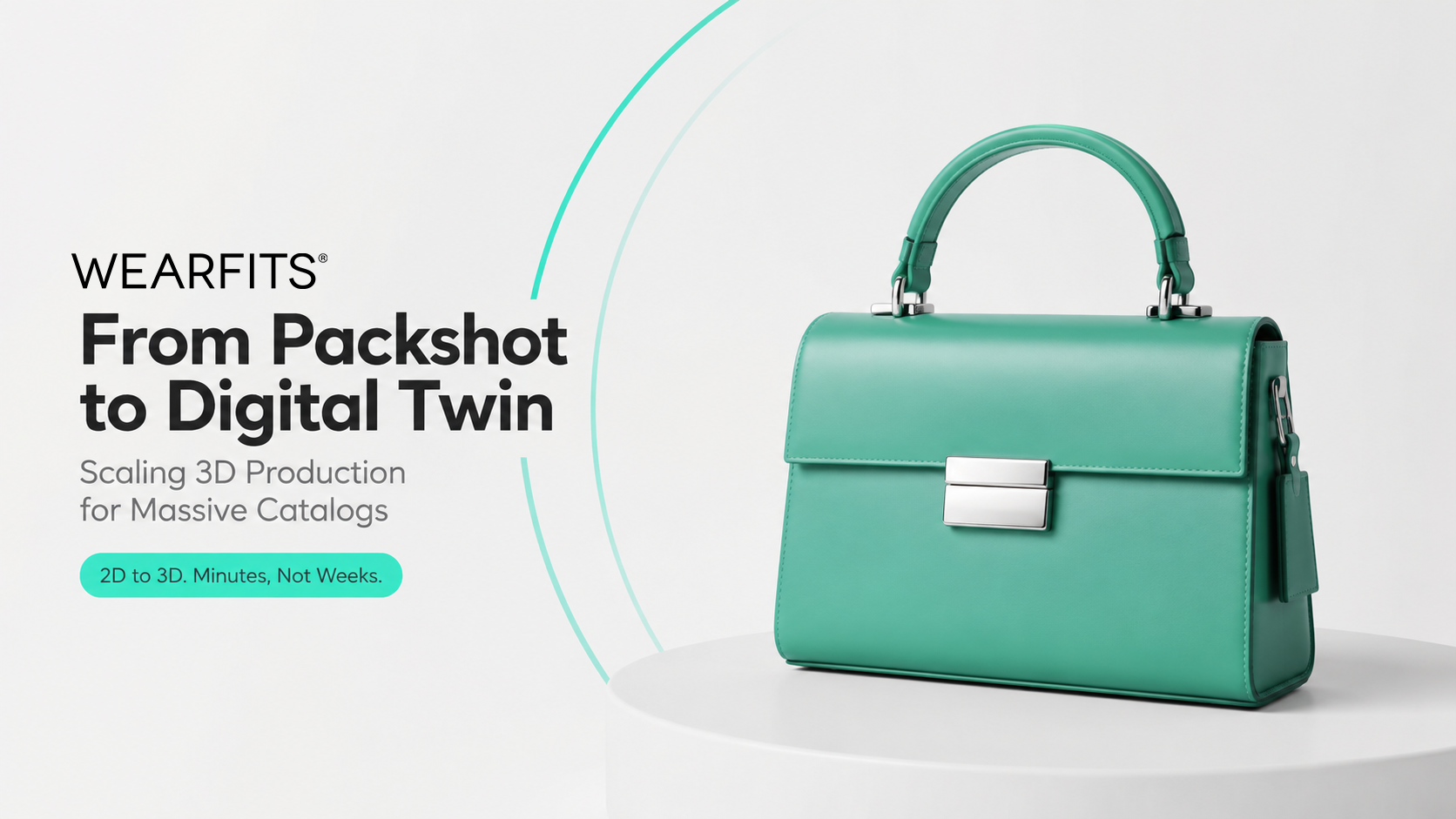
WEARFITS removes this barrier through an AI-driven 2D-to-3D pipeline. Using standard product photography and packshots, our technology generates a physics-ready digital twin in minutes per SKU.
This allows brands to deploy virtual try-on with real-time physics across an entire catalog instead of limiting the experience to a few hero items. Different silhouettes, materials, straps, and carry modes can be supported at production scale.
The Bottom Line: Moving From Demos to Production
For fashion brands in 2026, the question is no longer whether to adopt AR. The real question is which platform can support the complexity of a full bag catalog.
A vendor that can only demonstrate a static crossbody bag is not ready for modern accessory collections. Real catalogs include totes, clutches, backpacks, shoulder bags, handbags, structured designs, and soft silhouettes, all with different tracking and physics requirements.
Virtual try-on has evolved from a marketing gimmick into a core part of commerce infrastructure.
By investing in real-time bag physics, natural draping and swing, accurate scaling, advanced AI masking, and switchable carry modes, brands are creating a digital fitting room that delivers measurable ROI through higher confidence, stronger conversion, and fewer returns.
Is your bag catalog ready for the interactive shift?
WEARFITS is the only platform shipping production-grade bag physics across every silhouette.