Shopify
AR Try-On
2D-to-3D

Fashion ecommerce has entered a new stage. A few years ago, a clean studio photo, a white background and several lifestyle shots were enough to make an online product page look professional. In 2026, that standard no longer gives fashion brands a real advantage. The market is crowded, advertising is expensive and shoppers decide within seconds whether a product deserves their attention. For Shopify fashion stores, especially smaller brands, product visualization is now more than a visual upgrade. It is a business tool that can build trust, increase engagement and reduce costly returns.
The traditional ecommerce experience is passive. A visitor opens a product page, scrolls through images, zooms in on details and tries to imagine how the item might look in real life. This approach worked when online shopping was less competitive and customers had lower expectations. Today, people want more information before they buy. They want to understand size, texture, shape, fit, color and movement. They do not only want to look at a product. They want to experience it.
That is why augmented reality, virtual try-on and interactive 3D visualization are becoming essential for modern Shopify fashion stores. These technologies turn a product page from a static catalogue into an active shopping experience. Instead of asking, “Do I like this product in the photo?”, the shopper can ask a more personal question: “Can I see myself wearing this?”
Modern shoppers have very little patience. In many cases, a visitor decides whether to stay on a product page within only a few seconds. This creates a serious challenge for smaller fashion brands. A Shopify store may pay similar advertising rates to a much larger competitor, but it does not have the same name recognition or customer loyalty. When traffic is expensive, every visit has to work harder.
Static photography can still be beautiful, but beauty alone does not always create action. A shopper may like the look of a shoe, bag or jacket and still leave because they cannot picture it on themselves. The image may be attractive, yet the decision remains abstract. The customer still has to imagine the proportions, styling and real-life feel of the item.
Interactive visualization reduces that distance. A virtual try-on tool places the product in a familiar context: the customer’s own body, face, foot or space. This changes the emotional response. The item no longer feels like something shown by a store. It starts to feel like something the shopper might actually own.
One of the biggest problems in fashion ecommerce is the gap between expectation and reality. Customers know that product photos can be carefully lit, edited and styled. They may worry that a color will look different at home, that the material will not fall as expected or that the item will look smaller, larger or cheaper than it appeared online.
This uncertainty affects both conversion and returns. Fashion has some of the highest return rates in ecommerce because customers often buy without enough confidence. They make a guess, wait for delivery, try the product at home and send it back if reality does not match what they imagined. For the shopper, this is inconvenient. For the retailer, it is expensive. Returns reduce margins, create operational pressure and can turn a profitable order into a loss.
Traditional photos cannot fully solve this problem. A packshot may show the product clearly, but it cannot explain how a shoe sits on the foot, how a bag looks against the body or how a garment behaves from different angles. Even a large photo gallery may not be enough when the customer is making a personal decision.
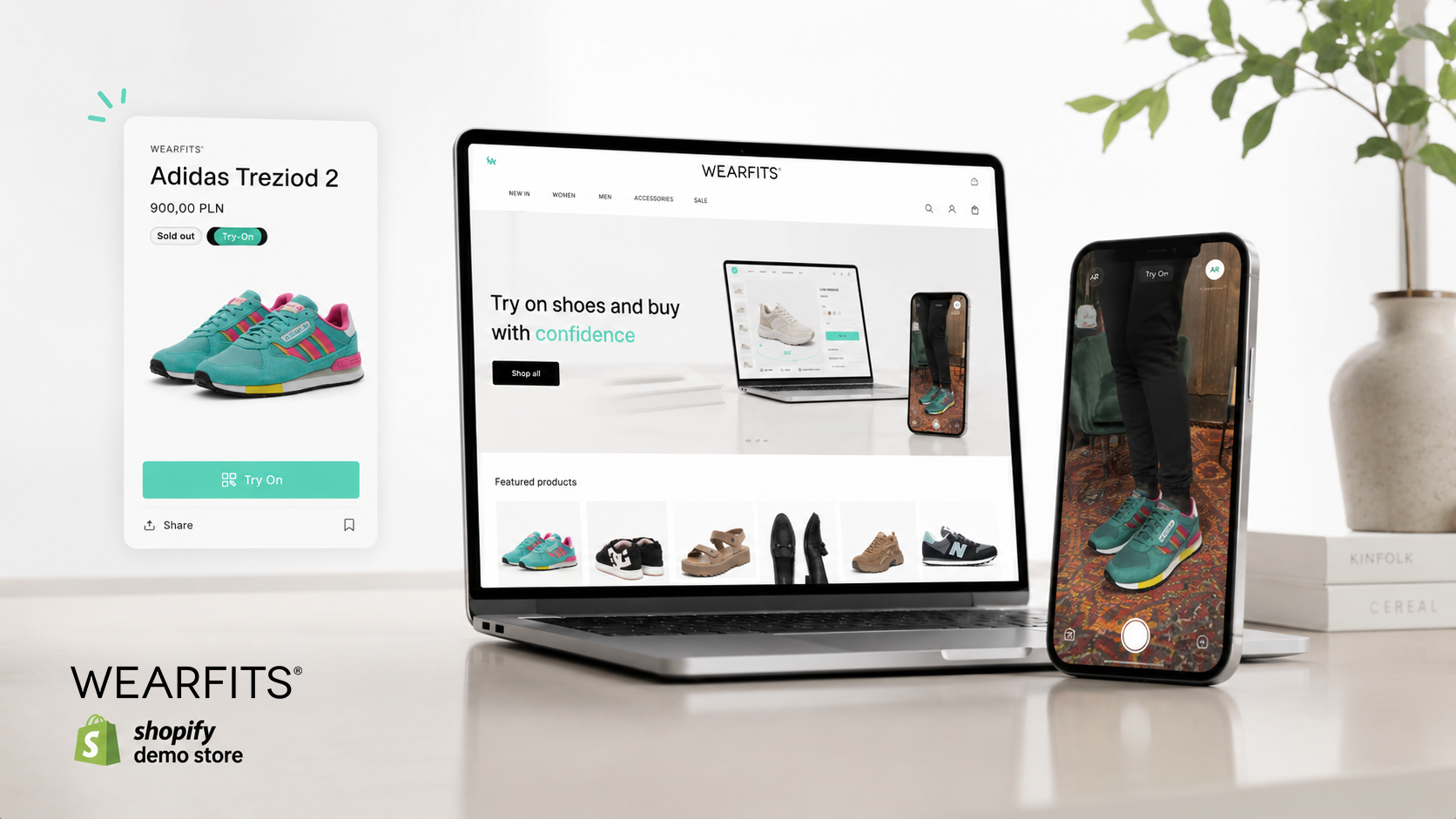
AR and 3D visualization help close this trust gap. Accurate scaling, realistic textures and smart occlusion make the digital product feel more natural in the customer’s environment. For example, a shoe that appears partly under a trouser leg feels more believable than a flat object placed on top of a camera image. These details make the preview useful, not just entertaining.
The standard ecommerce product page encourages scrolling. The customer looks, swipes, zooms and moves on. The experience is quick, but often shallow. Interactive product visualization changes that behavior by inviting the shopper to participate.
When a customer opens a virtual try-on feature, they spend more time with the product. They rotate it, compare colors, test it from different angles and imagine how it fits into their life. This creates a stronger relationship with the item because the shopper is not only observing it. They are exploring it.
That extra time matters. In ecommerce, engagement is often a signal of purchase intent. A visitor who spends ten seconds on a product page is very different from a visitor who spends a minute testing how the product looks in AR. The second shopper is already imagining ownership, and that imagination is one of the most important steps toward checkout.
Virtual try-on brings part of that social behavior back. When people see a product on themselves, they are more likely to capture the moment and share it. A shopper might send a screenshot to a group chat and ask, “Does this suit me?” or “Which color looks better?” That kind of sharing is powerful because it feels natural. It is not a polished advertisement. It is a real purchase consideration happening between people who trust each other.
Many fashion brands have delayed AR adoption because they assume 3D content is too expensive or too complicated. In the past, that concern was valid. Creating digital product models often required specialist 3D artists, CAD files, long production timelines and budgets that only large retailers could justify. For brands with hundreds of SKUs, the process seemed impossible to scale.
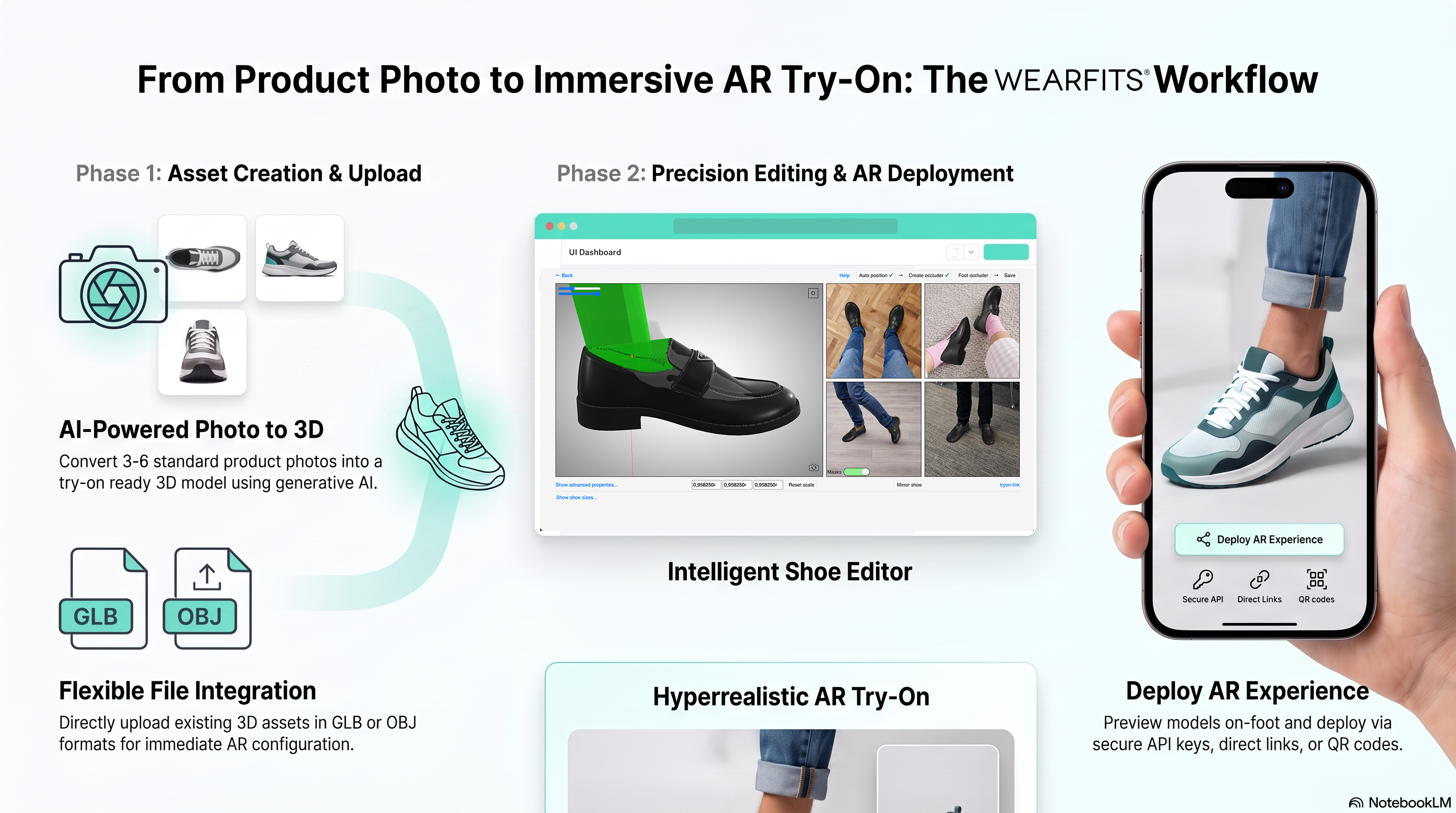
That barrier is now much lower. Photo-to-3D workflows and AI-assisted asset creation are changing the economics of product visualization. Instead of building every model manually from scratch, brands can generate digital twins from existing product photography. With clean images from different angles, software can reconstruct shape, texture and proportions much faster than traditional production methods.
Quality still matters. A poor 3D model can damage trust just as quickly as a poor product photo. The experience has to be smooth, accurate and realistic. But the path to creating that experience is becoming more accessible. Smaller Shopify brands can now consider interactive visualization without needing enterprise-level resources.
High-quality photography still matters. It supports brand identity, product detail and visual storytelling. The real question is whether photos are enough on their own. Increasingly, the answer is no.
Modern shoppers want confidence before they buy. They want proof that a product will match their expectations. They want to interact with items in a way that feels personal, not generic. Static images can introduce a product, but interactive visualization can move the customer closer to a decision.
This matters because the economics of ecommerce are becoming tougher. Advertising costs are high, attention is limited and customers have endless alternatives. A Shopify fashion brand that improves conversion, reduces returns and creates more shareable shopping moments gains an advantage that goes beyond visual appeal. It improves the unit economics of each order.
The online fashion catalogue is evolving. The next generation of ecommerce will not be built only around images, descriptions and size charts. It will be built around personalized and interactive experiences that help customers answer the questions that really matter: Will this fit my style? Will it look good on me? Can I trust what I am seeing?
Static product photos cannot answer all of those questions. They can inspire interest, but they often leave too much to the imagination. Virtual try-on, AR commerce and 3D product visualization reduce that uncertainty by bringing the product closer to the customer’s real life.
For Shopify fashion store owners, this is not simply a technology trend. It is a business opportunity. Brands that adopt interactive visualization early can create stronger engagement, lower return rates and a more memorable shopping experience. They can turn product pages from passive galleries into digital fitting rooms and give customers the confidence they need to buy.
The future of online fashion is not flat. It is three-dimensional, personal and participatory. For brands that want to grow in a competitive market, static photos are no longer the finish line. They are only the starting point.